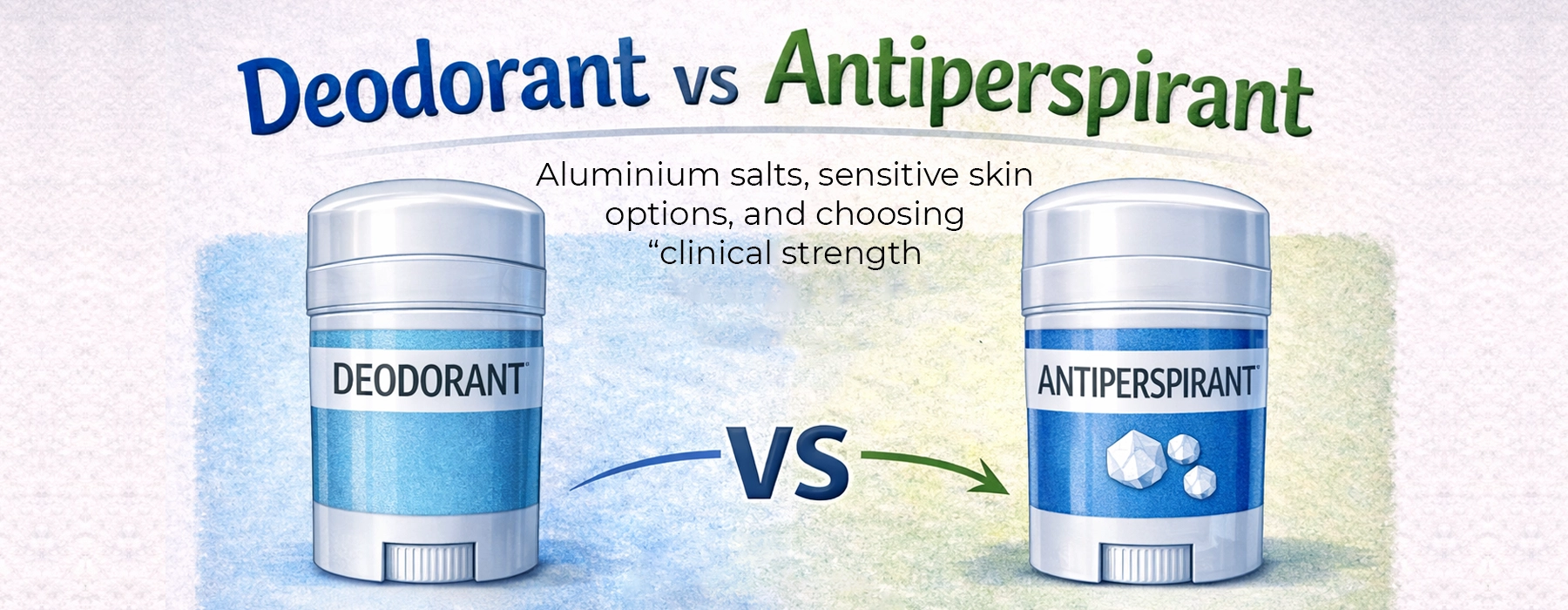
You step out of the shower, apply your usual product, and wonder why sweat soaks through your shirt by midday or why your underarms sting after every use. The confusion starts when you treat deodorant and antiperspirant as the same thing. They solve different problems, use different activities, and choosing the wrong one leaves you frustrated. Aluminium salts block sweat but can irritate sensitive skin. “Clinical strength” promises more control yet often brings more questions. This guide strips the confusion and walks you through aluminium salts, sensitive skin options, and when clinical strength makes sense.
Deodorant vs antiperspirant: what each solves
-
Deodorant masks or neutralise odour by targeting bacteria that break down sweat on your skin, so you smell fresh without reducing wetness.
-
Antiperspirant reduces sweat output by blocking sweat ducts with aluminium salts, which lowers wetness and cuts odour as a side effect since bacteria get less sweat to feed on.
-
If your shirt shows damp patches yet you smell fine, you need sweat control, not more fragrance, so antiperspirant fits.
-
If your underarms stay dry yet you notice odour mid-afternoon, you need bacteria control, not duct plugs, so deodorant works.
-
If you want both, pick a combined antiperspirant-deodorant formula that delivers sweat reduction and odour masking in one product.
Aluminium salts: how they block sweat (and why they matter)
-
Aluminium chlorohydrate and aluminium zirconium compounds dissolve in sweat at the duct opening, forming shallow plugs that reduce flow to the skin surface for 24–48 hours.
-
Those plugs trap sweat below skin level, so wetness drops and bacteria receive less moisture to process into odour.
-
Apply antiperspirant at night on clean, dry skin so aluminium salts set while you sleep and sweat production runs lowest.
-
Let the product dry fully before dressing to avoid residue transfer and maximise duct contact time.
-
Aluminium concentrations in over-the-counter antiperspirants range 10–25%, with higher percentages delivering stronger sweat reduction and longer plug duration.
Sensitive skin reactions: irritation triggers and fixes
-
Aluminium salts sting or redden skin when applied immediately after shaving, since micro-cuts let actives penetrate deeper and trigger inflammation.
-
High-concentration formulas (20%+) increase irritation risk for eczema-prone or reactive skin, so start with lower-strength options (12–15%) and test tolerance.
-
Fragrance compounds and alcohol in some antiperspirants worsen redness and burning, especially when layered with friction from tight clothes or heavy rubbing during application.
-
If antiperspirant irritates, switch to aluminium-free deodorant for odour control without sweat-blocking actives, or trial a gentler antiperspirant formula with aluminium sesquichlorohydrate, which causes less sting than standard chlorohydrate.
-
Apply at night only, rinse in the morning, and skip midday reapplication to reduce skin contact hours while keeping sweat control intact.
Aluminium-free deodorant options for sensitive skin
-
Triethyl citrate and zinc ricinoleate neutralise odour bacteria without plugging sweat ducts, so you stay fresh without aluminium exposure.
-
Baking soda-free formulas suit pH-sensitive skin that reacts to alkaline ingredients commonly used in natural deodorants.
-
Mineral-based options (zinc gluconate, perlite) absorb light moisture and fight bacteria without full antiperspirant action, fitting those who sweat mildly yet react to aluminium salts.
-
Test a patch on your inner arm for 48 hours before full underarm use to spot reactions early, since natural formulas still contain essential oils or plant extracts that irritate some users.
-
Reapply aluminium-free deodorant mid-day if odour returns, since these formulas do not block sweat and bacteria activity resumes faster than with antiperspirant plugs.
“Clinical strength” antiperspirants: definition and use cases
-
“Clinical strength” describes over-the-counter antiperspirants with maximum aluminium concentrations (typically 20–25% aluminium zirconium) marketed for heavy sweaters and stress sweat.
-
Night application becomes non-negotiable for clinical formulas, since higher aluminium loads need dry, resting skin to form effective plugs that last through morning showers and daytime activity.
-
Clinical strength fits hyperhidrosis (excessive sweating), frequent shirt soaking, or cases where standard 15% antiperspirants fail despite correct use.
-
These products do not reach prescription strength (30%+ aluminium), so persistent heavy sweating warrants medical assessment rather than repeated retail purchases.
-
If clinical strength stings or causes rash, reduce frequency to every other night or step back to standard strength, since forcing daily use worsens irritation and breaks skin barrier over time.
Choosing the right option: match product to problem
-
Choose deodorant when odour bothers you more than wetness, your underarms stay mostly dry, or aluminium salts trigger burning and redness.
-
Choose standard antiperspirant (12–15% aluminium) when damp patches show on shirts, chafing occurs from underarm wetness, or you want 24-hour sweat control without irritation.
-
Choose clinical strength when standard antiperspirant use at night on dry skin still leaves you damp during normal activity, or stress sweat soaks through clothes.
-
Choose aluminium-free deodorant when skin reacts to every antiperspirant you try, you prefer natural formulas, or you sweat lightly and only need odour defence.
-
Avoid layering antiperspirant with body spray immediately after application, since fragrance alcohol can increase sting on freshly treated skin; let antiperspirant dry for 5 minutes first.
Application rules that improve results and reduce irritation
-
Apply antiperspirant at night, not morning, since sweat production drops during sleep and plugs form without immediate friction or washing disruption.
-
Spread a thin, even layer across clean, dry underarms, since thick application increases residue without boosting sweat control.
-
Wait 10–15 minutes before dressing so the product dries fully and does not transfer to clothing or trap moisture against skin.
-
Skip shaving and antiperspirant application on the same day, since micro-cuts increase aluminium salt penetration and trigger stinging or rash.
-
Rinse underarms in the morning if irritation persists, since sweat plugs stay active even after washing and morning removal reduces daytime skin exposure.
Shop Deodorant & Antiperspirant
When deodorant vs antiperspirant confusion clears, your routine fits your body instead of fighting it. Aluminium salts block sweat effectively yet irritate reactive skin, so sensitive users need aluminium-free deodorant or gentler antiperspirant timing. Clinical strength suits heavy sweaters who apply correctly at night, not casual users chasing marketing claims. Match product type to your main issue—odour, wetness, or irritation—then adjust strength, timing, and application method until results stay consistent without discomfort. Test one change at a time across a full week, so you spot what works before switching again.