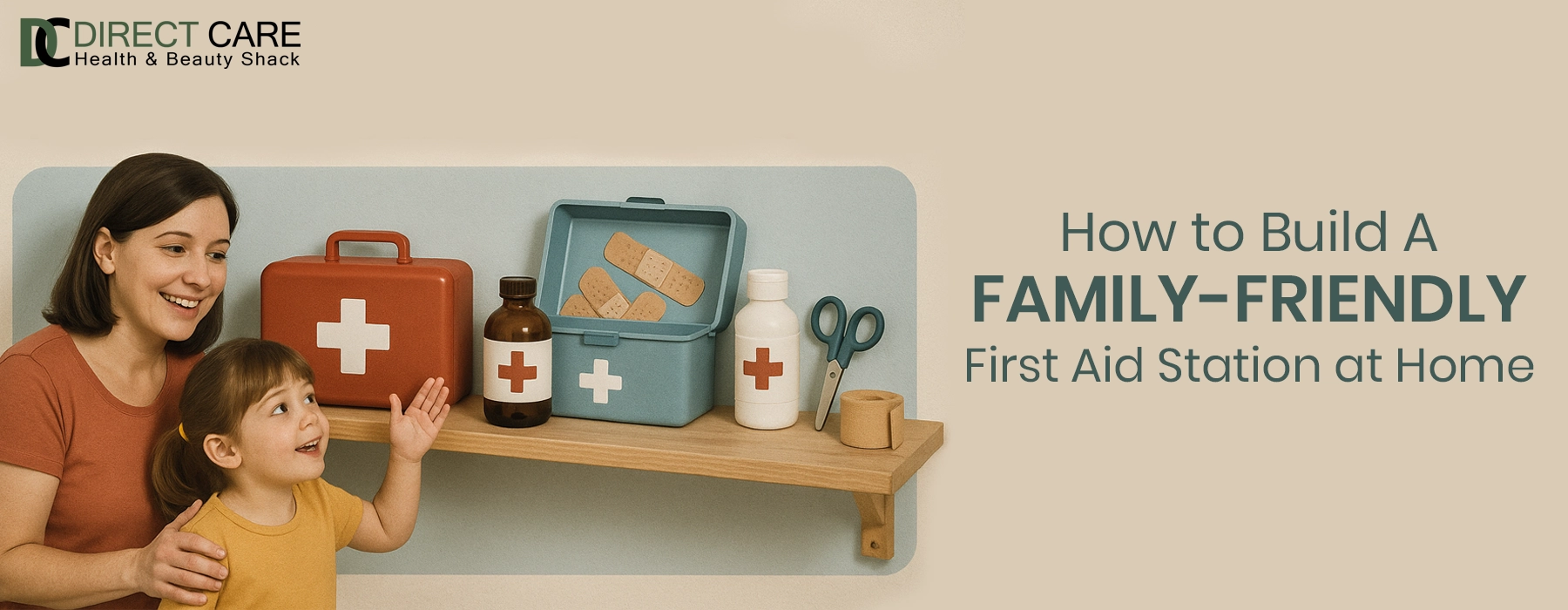
Accidents at home rarely come with warning. From small cuts in the kitchen to falls during play, families encounter situations that demand quick action. A home first aid kit provides the reassurance that you can manage these incidents with confidence. A family-friendly station does more than store plasters and bandages; it ensures supplies are organised, easy to access, and ready when needed. Direct Care offers a wide range of first aid supplies that help you set up a station designed around everyday family needs. Here’s how to build a reliable home first aid kit that keeps your household prepared for emergencies.
Choosing the Right Storage Space
Setting up a home first aid kit begins with choosing the right spot. Keep these points in mind:
- Accessibility: Select a location adults can reach quickly in an emergency, but out of direct reach of children.
- Practical locations: High cupboards in the kitchen, a hallway cabinet, or a lockable box in the utility room work well.
- Storage conditions: Keep supplies in a cool, dry place. Avoid bathrooms or damp areas where moisture damages packaging and shortens shelf life.
- Organisation tools: Use labelled containers or clear pouches to separate categories such as wound care, burn care, and illness relief.
Core First Aid Kit Essentials
Every family station should begin with a strong foundation of supplies. These core items address most minor injuries:
- Plasters and bandages: Stock a variety of shapes and sizes to cover cuts, grazes, and scrapes. Flexible, breathable plasters such as Elastoplast Fabric suit daily use.
- Adhesive dressings: Products like Softpore Sterile Dressings protect larger wounds and keep them clean.
- Medical tapes: Non-stretch zinc oxide tape provides firm support, while micropore tape offers gentle adhesion for sensitive skin.
- Antiseptic wipes: Essential for wound care. They clean the skin quickly and reduce the risk of infection.
- Gloves: Keep a box of disposable gloves for safe handling when treating injuries.
- Scissors: Use sharp, clean scissors to cut bandages, tape, or dressings with ease.
With these items, your home first aid kit covers the majority of everyday household injuries.
Child-Focused Additions for Family Safety
Families with children often face bumps and scrapes that require extra care. Adapting your kit to suit younger members ensures safety is always a priority:
- Varied plasters: Include fun designs or hypoallergenic options for sensitive skin.
- Additional antiseptic wipes: Outdoor play often leads to grazes and cuts, so keep extra packs on hand.
- Instant cooling gel packs: Provide quick relief for bruises, sprains, or insect bites.
- Digital thermometer: A reliable thermometer makes it simple to monitor fevers.
These additions create a family-first kit that addresses the realities of childhood accidents.
Advanced Supplies for Prepared Families
Beyond the basics, some families prefer a more comprehensive set of first aid supplies. These extras provide greater reassurance when managing unexpected situations:
- Sterile wound dressings: Suitable for deeper cuts that require more protection.
- Burn dressings or gels: Valuable for accidents in the kitchen or garden.
- Tweezers: Useful for removing splinters, glass fragments, or insect stingers.
- Reusable elastic bandages: Offer support for sprains and strains until professional help is available.
Adding these items transforms a standard home first aid kit into a complete station that supports both minor and more serious injuries.
Organisation and Labelling Tips
Supplies lose value if you can’t find them quickly. Organisation ensures your first aid station works under pressure:
- Group items by category, such as wound care, burn treatment, illness support, and protective tools.
- Use clear pouches or labelled containers to make categories obvious.
- Place high-use items like antiseptic wipes at the front for quick access.
- Check expiry dates regularly and replace products that have expired.
- Keep duplicates of essentials in travel bags or cars so you remain prepared away from home.
A structured station saves precious minutes during emergencies and reduces stress for the entire family.
Safety and Maintenance of Your First Aid Station
Your kit must stay in good condition to serve its purpose. Regular maintenance avoids unpleasant surprises when accidents happen:
- Restock plasters, antiseptic wipes, and tape after every use.
- Inspect wound care supplies to confirm packaging is intact and sterile.
- Keep the kit clearly marked and teach family members its location.
- Guide older children on responsible use under adult supervision.
Maintaining a home first aid kit is not a one-off task. It requires consistent attention, but the payoff is peace of mind.
Knowing When to Seek Professional Help
A first aid kit provides valuable support, but some situations demand medical expertise. Recognise the limits of at-home treatment:
- If bleeding continues despite firm pressure, seek professional care.
- Severe burns, head trauma, or suspected broken bones need urgent medical attention.
- For guidance on unclear symptoms, call NHS 111 or consult a GP.
Preparedness involves using first aid supplies effectively and knowing when professional intervention is necessary.
Shop First Aid Items
A well-prepared home first aid kit strengthens family safety. By combining essential items, child-focused additions, and advanced tools, you create a reliable station that builds confidence during emergencies. Regular checks and clear organisation keep your kit ready for use at any moment. Direct Care supplies everything you need to set up and maintain a first aid station at home. From plasters and tapes to antiseptic wipes and wound care dressings, our range ensures your family has access to trusted, affordable products. Shop first aid supplies at Direct Care today and take a proactive step towards keeping your household safe.