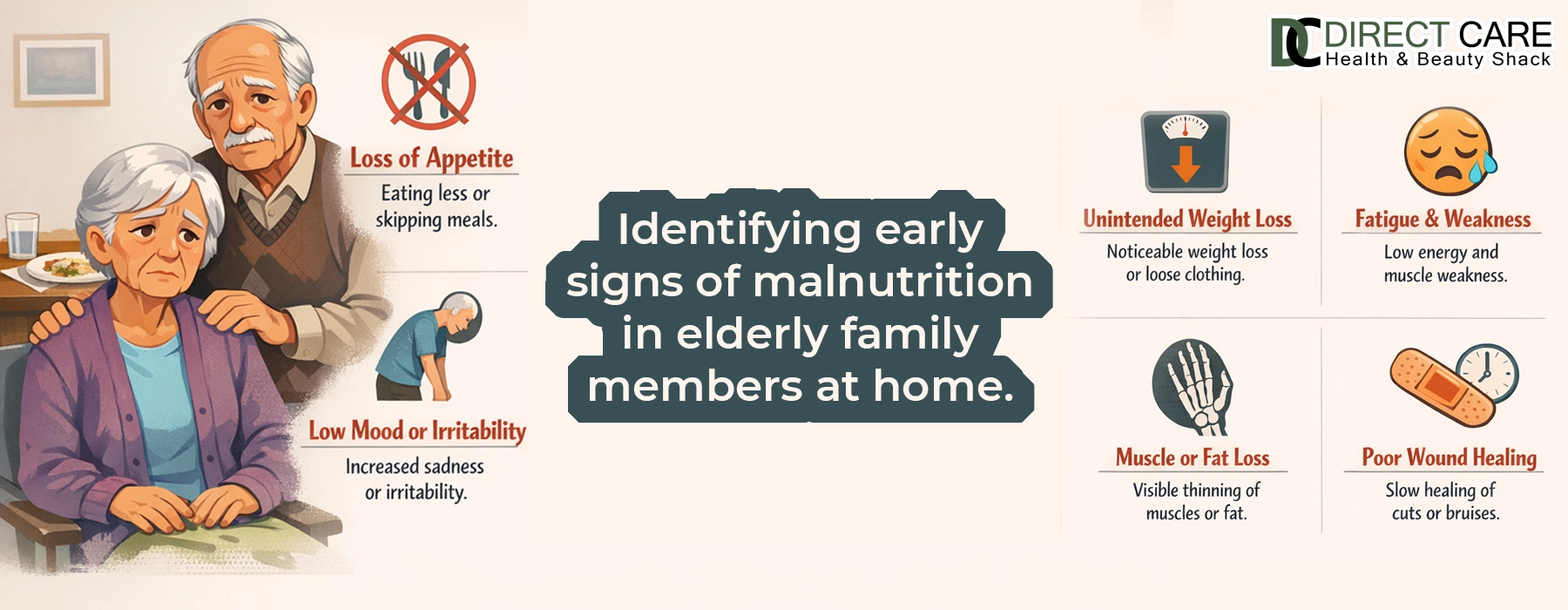
Watching a parent or elderly relative lose their physical strength often creates a period of intense stress. Within many UK households, malnutrition develops slowly and frequently goes unnoticed until a major health crisis occurs. Meeting general nutritional needs becomes a significant daily challenge as appetites fade and physical mobility decreases. While age-related changes are natural, a sudden decline in health often indicates hidden dietary gaps. Direct Care provides Vitamins & Supplements to bridge these gaps and support senior independence. This guide helps you identify early warnings of malnutrition before they lead to serious complications.
Recognising Physical Clues and Visible Changes in Appearance
A person’s body tells an honest story about their current nutritional status. You must look beyond the surface to identify how the body adapts to a lack of energy.
-
Clothing that previously fit well now appears loose or drapes awkwardly around the shoulders.
-
Jewellery and wristwatches often slide around the wrist due to significant muscle loss.
-
Facial fat loss often manifests as hollowed temples or prominent cheekbones in elderly relatives.
-
Gums frequently shrink during periods of poor nutrition, causing dentures to feel loose or uncomfortable.
-
Ribcages and collarbones become more visible as the body consumes its own fat stores.
-
Protein deficiency often leads to paper-thin skin that bruises with very little physical impact.
-
Horizontal ridges across the fingernails suggest a critical shortage of essential minerals.
-
Hair often loses its natural shine or falls out easily due to vitamin deficiencies.
-
Iron deficiency frequently correlates with pale skin tones and a lack of healthy colour.
-
Minor wounds and simple scratches that refuse to heal indicate a failing internal repair system.
-
Swelling in the ankles, known as oedema, serves as a common sign of severe malnutrition.
-
Muscle wastage in the calves makes walking feel unstable and increases the risk of falls.
-
The body prioritises vital organs by sacrificing muscle tissue during periods of prolonged starvation.
-
Check for a stooped posture that suggests a loss of bone density or core strength.
-
Pale nail beds often indicate a lack of sufficient oxygen in the blood supply.
-
Observe the eyes for a dull or sunken appearance that signals dehydration or vitamin gaps.
-
Tongue soreness or unusual redness often points to a lack of B-group vitamins.
-
Frequent skin infections suggest that the immune system lacks the nutrients needed for protection.
-
Cold hands and feet indicate that the body struggles to maintain its internal temperature.
-
Loss of strength in the hands makes opening a simple jar or bottle impossible.
Identifying Cognitive Shifts and Declining Energy Levels
Nutrition serves as the primary fuel for both the brain and the body’s physical stamina. When general nutritional needs remain unmet, the mind often becomes foggy, and the body grows weak.
-
Frequent daytime napping that disrupts a normal routine often signals a major energy deficit.
-
Seniors often struggle to follow the plot of a familiar TV show during periods of fog.
-
Lethargy manifests as a sudden refusal to engage in favourite hobbies or short daily walks.
-
Muscle weakness makes standing up from a low sofa a visible and difficult physical struggle.
-
Cognitive confusion often stems from a lack of B12 and poor daily hydration levels.
-
A constant complaint of feeling cold suggests the body lacks fuel for natural thermoregulation.
-
Dizziness upon standing up often indicates a lack of electrolytes or insufficient fluid intake.
-
Fluctuating blood sugar levels frequently cause sudden mood swings and irritability in elderly family members.
-
A decline in physical movement speed often mirrors a drop in total calorie consumption.
-
Nutritional gaps often lead to a mental fog that mimics the early signs of dementia.
-
Providing targeted vitamins, minerals and nutrition supplements often restores mental clarity and focus.
-
A lack of motivation to complete simple daily tasks suggests a deep physical exhaustion.
-
Poor concentration makes managing finances or reading mail a confusing and stressful chore.
-
Low vitamin D levels often contribute to feelings of low mood and seasonal depression.
-
Physical fatigue reduces the desire to socialise, leading to further isolation and poor health.
-
Slowed speech or searching for common words indicates a drop in neurological energy.
-
The brain requires a steady supply of glucose to maintain focus during complex tasks.
-
Irregular sleep patterns often stem from a lack of magnesium or calcium in the diet.
-
Headaches frequently signal that the body is struggling with dehydration or low mineral levels.
-
Persistent yawning throughout the day indicates that the respiratory system lacks sufficient energy.
Monitoring Eating Habits and Grocery Management Behaviours
Malnutrition in the elderly often relates to management issues rather than a lack of available food. Understanding the “why” behind a fading appetite is a requirement for long-term health management.
-
Fridges that contain only expired milk or wilted vegetables signal a household management problem.
-
Many seniors develop a sudden preference for low-nutrient, sugary snacks over balanced meals.
-
Relatives often “forget” to eat lunch or miss dinner entirely without a social prompt.
-
Arthritis makes opening jars or heavy tins a significant barrier to accessing essential food.
-
Social isolation and depression act as powerful appetite suppressants for seniors living alone.
-
The lack of a social trigger for meals often leads to accidental and chronic under-eating.
-
Chronic dental pain or ill-fitting plates make eating a chore rather than a pleasant experience.
-
We provide vitamins, minerals and nutrition supplements to act as a vital safety net.
-
A messy or unorganised kitchen often indicates that cooking has become too physically demanding.
-
Check for uneaten meals left on the side or in the microwave after a visit.
-
Sudden weight loss often occurs when a senior stops cooking for themselves after a bereavement.
-
A fear of choking on certain textures causes many seniors to restrict their diet.
-
Gastrointestinal issues often lead to a self-imposed limitation on diverse and healthy food groups.
-
Low income sometimes forces seniors to prioritise heating bills over fresh and healthy groceries.
-
Cognitive decline makes following a recipe or using a stove a dangerous and confusing task.
-
A diminished sense of taste and smell makes food seem unappealing and bland.
-
Medication side effects often include nausea or a metallic taste that ruins the appetite.
-
Eating alone removes the social enjoyment that encourages a healthy and regular intake.
-
Observe if your relative only drinks tea and eats biscuits throughout the day.
-
Unexplained weight gain can actually hide malnutrition if the diet consists only of empty carbohydrates.
The Biological Role of Vitamins, Minerals and Nutrition Supplements
Addressing long-term deficiencies requires a strategic combination of dietary adjustments and supplementation. Each nutrient plays a specific role in maintaining the structural integrity of the ageing body.
-
Vitamin D supports calcium absorption to prevent bone fractures and maintain skeletal strength.
-
B vitamins are required for converting food into the energy needed for daily physical movement.
-
Zinc serves as a vital component in the body’s natural wound-healing and repair processes.
-
Iron ensures that oxygen reaches every cell in the body to prevent chronic anaemia.
-
Magnesium supports healthy muscle function and prevents the occurrence of painful night-time cramps.
-
Omega-3 fatty acids help to maintain cognitive function and reduce systemic inflammation in joints.
-
Calcium remains essential for maintaining heart health and strong teeth in later life.
-
Vitamin C supports the immune system in its constant battle against seasonal infections.
-
Fibre ensures that the digestive system remains efficient and prevents uncomfortable chronic constipation.
-
Potassium helps to regulate blood pressure and supports a healthy and steady heartbeat.
-
Our range of vitamins, minerals and nutrition supplements provides these essential building blocks.
-
Supplementation acts as a bridge when physical illness prevents a person from eating enough.
-
Nutrients must be easily absorbable to accommodate a slower and less efficient digestive system.
-
Liquid supplements provide a practical solution for those who struggle to swallow large tablets.
-
Multivitamins offer a broad-spectrum approach to covering daily general nutritional needs for seniors.
-
A healthy balance of vitamins ensures that the nervous system remains calm and functional.
-
Antioxidants help to protect cells from the oxidative stress associated with the ageing process.
-
Adequate protein intake remains a requirement for repairing skin and maintaining vital muscle mass.
-
Hydration levels must remain high to allow the body to process and transport these nutrients.
-
Consulting with a pharmacist helps you choose the most effective formula for your relative.
Practical Steps for Home Intervention and Support
Once you identify the warning signs, you must take active steps to restore your relative’s health. Small changes in the home environment make a massive difference to their daily intake.
-
Offer smaller and more frequent meals throughout the day to avoid overwhelming the appetite.
-
Focus on nutrient-dense foods like avocados, eggs, and full-fat dairy to increase calorie count.
-
Soft-cooked vegetables and tender meats solve many issues related to dental pain or chewing difficulty.
-
Eat meals together to turn dining into a social and enjoyable part of the day.
-
Set a daily alarm to remind your relative to drink water and take their vitamins.
-
Keep a food diary for one week to track the actual amount of food consumed.
-
Arrange for grocery deliveries to ensure the fridge remains stocked with fresh and healthy options.
-
Consult a GP if you notice sudden weight loss or a significant behaviour change.
-
We offer expert advice on which vitamins, minerals and nutrition supplements best suit your needs.
-
Ensure the kitchen layout is safe and accessible to encourage independent meal preparation.
-
Use brightly coloured plates to make food more visually stimulating for those with poor sight.
-
Finger foods provide a practical solution for those with tremors or limited manual dexterity.
-
Fortify standard meals with extra calories using butter, cream, or high-quality oils.
-
Encourage light physical activity to naturally stimulate the appetite before a main meal.
-
Check that all medications are taken correctly to avoid any unnecessary side effects.
-
Maintain a positive and encouraging tone during meal times to reduce any meal-time anxiety.
-
Regularly review their nutritional status to see if your interventions are working effectively.
-
Independence is a priority, so offer help with cooking rather than taking it over completely.
-
A well-stocked cupboard of essentials prevents the stress of running out of food.
-
Consistent support ensures your loved ones feel valued and cared for in their own home.
Shop Vitamins & Supplements
Protecting your elderly relatives from the risks of malnutrition requires a professional and reliable source of high-quality support. We offer an extensive selection of Vitamins & Supplements specifically formulated to meet senior health requirements. Direct Care provides the essential vitamins, minerals and nutrition supplements your family needs to maintain their long-term strength and independence. Do not wait for a nutritional crisis to impact your home. Explore our collection and shop for the nutritional bridge your loved ones deserve today.