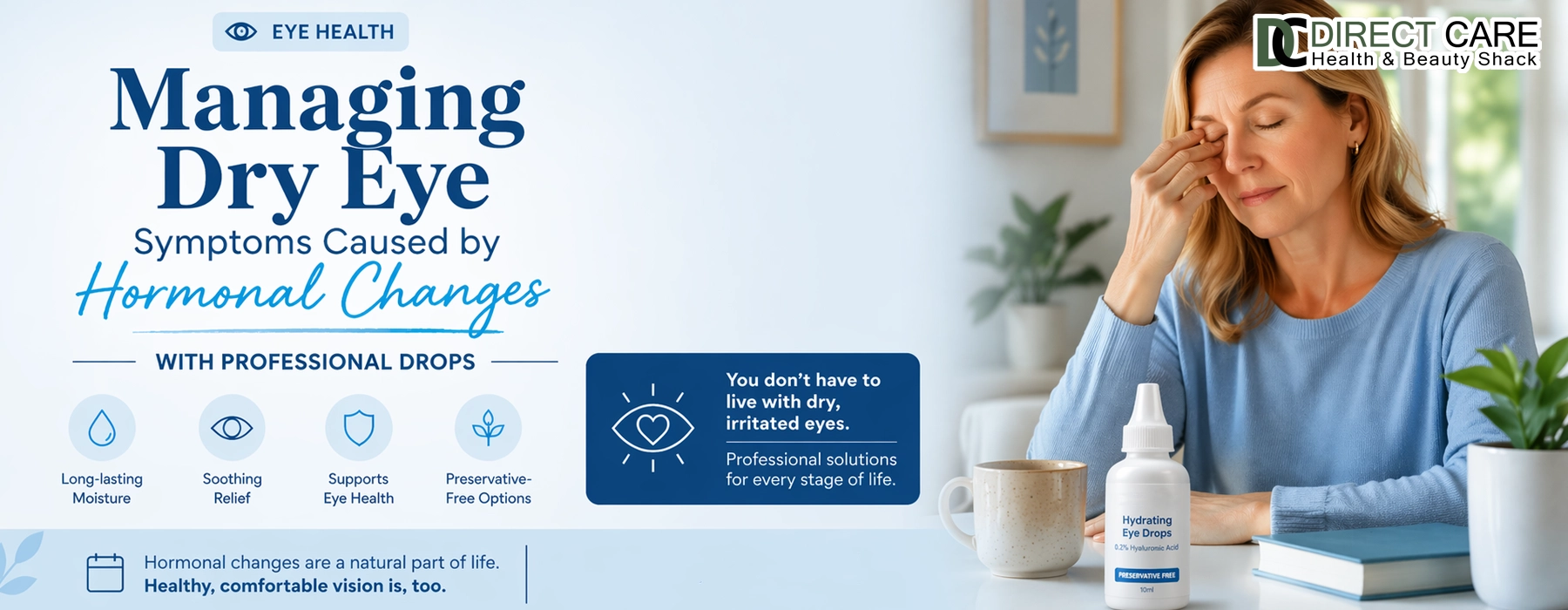
Fluctuating hormone levels during life stages like menopause and pregnancy often disrupt your tear film and lead to persistent ocular discomfort. While many people associate hormones with mood or energy, these chemical messengers also regulate the hydration of your eyes. When your internal balance shifts, the glands responsible for tears often struggle to keep up. This results in dryness, irritation, and blurred vision. In this blog, we discuss how your hormones affect your sight and how you can find relief. Managing dry eye symptoms caused by hormonal changes with medical-grade drops helps you maintain comfort and clear vision.
What is Hormone-Linked Dry Eye?
Hormonal health influences the complex system that keeps the surface of your eyes moist. When your body undergoes significant changes, your tear production often suffers in the following ways:
- Androgen and Oil Production: Androgens help the meibomian glands in your eyelids produce essential oils. These oils prevent your tears from evaporating. When androgen levels drop, your eyes dry out much faster.
- Oestrogen and Tear Volume: Oestrogen receptors exist throughout your ocular surface. Changes in oestrogen levels interfere with the watery part of your tears. This deficiency results in a lack of volume and lubrication.
- Menopause Impact: The decline in oestrogen and progesterone during menopause affects all mucous membranes. The eyes are particularly sensitive to this shift. This life stage often marks the beginning of chronic dry eye symptoms.
- Thyroid Regulation: Your thyroid gland regulates the metabolism of cells on your eye surface. Imbalances often lead to increased surface exposure. This exposure accelerates tear evaporation and worsens the feeling of dryness.
- Inflammatory Responses: Hormonal shifts trigger low-grade inflammation in your tear glands. This inflammation damages the cells that produce moisture. Medical-grade drops help break this cycle by providing a stable environment.
- Mucin Layer Health: Goblet cells in your eyes produce mucin, which helps tears stick to the surface. Hormonal changes reduce the density of these cells. Without enough mucin, tears bead up and roll off your eyes.
- Ageing and Depletion: As the body ages, natural hormone decline gradually weakens the tear film. This makes daily maintenance a necessity for many older adults. Consistent care prevents long-term surface damage.
Also Read:- What Is The Importance Of Vitamins And How Do They Function?
Common Symptoms to Identify
Identifying the signs of hormonal dry eye is the first step toward effective management. You need to look for these specific indicators:
- Persistent Grittiness: You feel as if dust or sand is trapped in your eyes despite blinking. This sensation indicates that the friction between your eyelid and the cornea is too high.
- Excessive Reflex Tearing: Your eyes water frequently when you step outside or look at a screen. These tears are mostly water and lack the oils needed to protect the eye. They provide temporary wetness without resolving the dryness.
- Burning and Stinging: A sharp, burning feeling occurs when the nerves on the surface lack a protective coating. This symptom often worsens at the end of the day. It signals that your ocular surface is under stress.
- Blurred Vision: Your vision becomes fuzzy but clears for a moment after you blink. An unstable tear film creates an irregular surface for light to pass through. You need consistent lubrication to maintain a sharp focus.
- Light Sensitivity: Bright sunlight or office lights cause discomfort or pain. This photophobia suggests that your cornea is irritated. Using medical-grade drops helps reduce this sensitivity.
- Redness and Irritation: The white part of your eye appears bloodshot due to dilated blood vessels. This redness is a response to chronic irritation. It often accompanies a tired or heavy feeling in your eyelids.
- Contact Lens Discomfort: Lenses require a healthy tear film to float comfortably. When hormones disrupt tear production, lenses feel scratchy. This often forces you to reduce your wear time.
- Mucus Discharge: You notice stringy mucus in or around your eyes. This happens when your tear film becomes too thick or concentrated. It leads to crusty eyes upon waking in the morning.
Why Choose Professional Eye Drops?
Standard drops often provide only temporary relief because they lack advanced lubricating properties. Medical-grade drops offer a higher level of care for the following reasons:
- Long-Lasting Lubrication: These formulas stay on the eye surface longer than standard saline. They provide sustained relief throughout your workday. This reduces the need for frequent re-application.
- Preservative-Free Safety: Many mass-market drops contain preservatives that irritate over time. Medical-grade drops use advanced delivery systems to stay sterile without chemicals. This makes them suitable for sensitive eyes.
- Hypotonic Rebalancing: Chronic dry eye causes your tears to become too salty due to evaporation. A hypotonic solution rebalances this salt concentration. This reduces pressure on your eye cells and promotes healing.
- Corneal Protection: Medical-grade drops create a resilient barrier on your cornea. This layer protects the surface from environmental triggers like wind and air conditioning. It allows minor irritations to heal faster.
- Enhanced Tear Stability: These formulations reinforce all three layers of your tear film. They help the oil, water, and mucus layers work together. A stable film stays on your eye longer to provide better protection.
- Immediate Visual Clarity: High-performance drops distribute quickly without causing prolonged blurring. You maintain a clear vision immediately after use. This is essential for driving or working at a computer.
- Economic Value: Multi-dose bottles with advanced filters last up to six months after opening. This is more economical than single-use vials that expire within a day. You get more use out of every purchase.
Key Components of Hyabak Technology
The design of Hyabak ensures you receive the best possible care for your eyes. Its unique features address the root causes of hormonal dryness:
- Sodium Hyaluronate: This natural lubricant mimics your own tears. It has high water-retention properties. It hydrates the ocular surface and reduces the friction caused by every blink.
- ABAK Bottle System: The patented bottle uses a filter to prevent bacterial contamination. This technology keeps the solution sterile for up to six months. It eliminates the need for irritating preservatives.
- Actinoquinol Properties: This ingredient provides an additional layer of defence against UV radiation. While you still need sunglasses, it supports the health of your ocular tissues. It adds value to your daily protection routine.
- Optimal Viscosity: The fluid matches the natural thickness of healthy tears. It provides enough substance to coat the eye without feeling sticky. This balance ensures maximum comfort during your daily activities.
- Fast Distribution: The drops spread evenly across the eye within seconds. They do not cause the “heavy” feeling associated with thick gels. You can return to your tasks immediately after the application.
- Versatile Compatibility: You can apply these drops while wearing your contact lenses. This hydrates the lens material and prevents it from drying out against your eye. It is a convenient solution for daily lens wearers.
Daily Management Strategies
Building a routine is essential for managing dry eye symptoms caused by hormonal changes with medical-grade drops. We recommend these practical steps:
- Consistent Application: Apply your drops at regular intervals, such as every four hours. Proactive use maintains a stable tear film. This prevents the inflammatory cycle of dryness from starting.
- Hydration from Within: Drink plenty of water to support your body’s moisture levels. Systemic hydration supports the glands that produce your natural tears. This dual approach improves the effectiveness of your drops.
- Digital Screen Breaks: Follow the 20-20-20 rule. Look at an object 20 feet away for 20 seconds every 20 minutes. This encourages natural blinking and spreads the tear film across your eyes.
- Environment Control: Use a humidifier to add moisture to the air in your home or office. Avoid pointing fans or air vents directly at your face. Reducing air movement across your eyes slows down evaporation.
- Nutritional Support: Include Omega-3 fatty acids in your diet. These nutrients support the oil-producing glands in your eyelids. Healthy glands produce better quality oils that keep your tears on your eyes.
- Eyelid Hygiene: Clean your eyelids daily with gentle wipes. This helps clear the openings of the glands that produce the oil layer of your tears. Clean glands are essential for a stable tear film.
- Protective Eyewear: Wear wraparound sunglasses outdoors to block wind and dust. Physical barriers reduce the airflow that strips moisture from your eyes. This keeps your drops on your eye surface for longer.
When to Seek Professional Support
While medical-grade drops manage most symptoms, some situations require an expert opinion. You need to consult an optician if you experience the following:
- Persistent Pain: Sharp or deep pain in the eye is not a typical symptom of dryness. It indicates a more serious issue, like an infection. A professional check is necessary to rule out corneal damage.
- Sudden Vision Changes: Any rapid loss of clarity or new flashes of light requires immediate attention. These are not standard dry eye symptoms. An eye care professional needs to perform diagnostic tests.
- Severe Redness: Redness that does not improve with drops needs investigation. It is capable of being a sign of internal inflammation. A specialist determines the exact cause and provides treatment.
- Unresponsive Symptoms: If your eyes do not feel better after two weeks of consistent use, book an appointment. You may need a higher concentration of lubricant. An optician can assess your tear film quality.
- Physical Eyelid Changes: Noticeable swelling or bumps on the eyelid need a medical check. These often relate to blocked glands that require clinical cleaning. Early intervention prevents long-term gland damage.
- Chronic Discharge: Yellow or green discharge signals a possible bacterial infection. An eye care professional prescribes antibiotic drops if needed. They also check for underlying issues like blepharitis.
The Final Word
The aforementioned highlights why managing dry eye symptoms caused by hormonal changes with medical-grade drops is an important practice for your well-being. By properly taking care of your vision during life’s transitions, you can enhance your quality of life. Direct Care provides the high-quality products you need to maintain ocular comfort. We supply recognised brands like Hyabak to ensure you receive effective hydration and protection. Browse our full collection of eye care products and find the right solution for your eyes’ needs. Make your eye health a priority in your daily routine to ensure you are at your best.