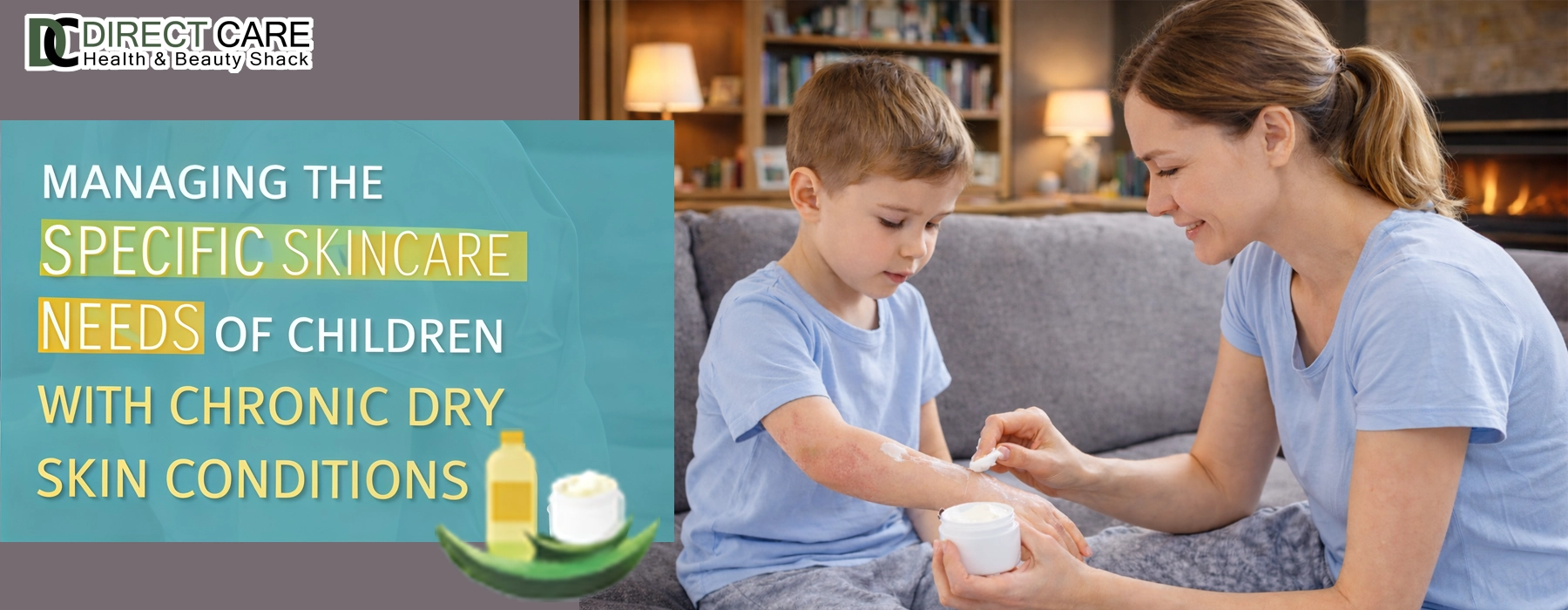
Managing children’s dry skin requires a consistent application of emollient-rich barriers to prevent transepidermal water loss (TEWL) and secondary infections. We understand infant skin is significantly thinner than adult skin, making it more susceptible to environmental irritants, allergens, and moisture fluctuations. When the skin barrier fails, it leads to the characteristic redness, itching, and scaling associated with childhood atopic dermatitis. At Direct Care, we focus on providing professional-grade skincare solutions which repair the cutaneous lipid barrier without the use of harsh chemicals or perfumes. This guide provides the technical knowledge needed to identify symptoms and establish a medical-grade hygiene routine for your child.
Symptoms of Dry Skin in Toddlers
You need to know what to look for when your child’s skin is dry. This helps you take action before it gets worse. We group these symptoms based on how bad the dryness is and how the child’s body is reacting.
- The skin can feel rough like sandpaper. This means it is dry and needs moisturiser.
- Red patches on the face, elbows and behind the knees mean the skin is losing water.
- Children often. Scratch the dry areas. This makes the skin worse. Can introduce bacteria.
- If the skin is very dry, it can. Hurt. These cracks need cream to heal.
- Scratching a lot makes the skin thick and hard. This is a sign of long-term dryness.
- When children are very itchy at night, they cannot sleep well. This makes them irritable and tired.
- Their skin can get very sensitive. React to normal soap or clothes.
- You can see skin flaking off. This happens when the skin is too dry, and the cells die.
- The dry areas can get hot and swollen. This means the skin is inflamed.
- The skin in the folds of the neck and limbs can get very dry. This is because it rubs together and loses moisture.
Bath Time for Eczema
Having a bath routine is crucial for children with dry skin. Normal soap and shampoo can strip the skin of its oils. You need to use a soap-free cleanser.
- Use a cleanser like Aveeno Baby Daily Care Hair & Body Wash. It has oatmeal that cleans the skin without disrupting its balance.
- Use water, not hot water. Hot water dries the skin.
- Keep bath time around ten minutes. Long baths dry the skin.
- Add oil to the bath water. This helps keep the skin moist.
- Do not scrub the skin. Use your hands or a soft cloth to clean it.
- Gently pat the skin dry with a towel. Do not rub.
- Apply moisturiser within three minutes of bathing to lock in moisture.
- After swimming, rinse your child with water to remove chlorine.
- Clean the skin folds to remove sweat and bacteria.
- Bathing before bed helps the skin cool down. Prepares it for nighttime moisturiser.
Best Moisturiser for Babies with Eczema
You need to choose a moisturiser that helps repair the skin and protects it from allergens. We have a range of moisturisers that are designed for eczema skin.
- Aveeno Baby Dermexa moisturiser has oats and ceramides that help fix the skin and soothe itching.
- Child’s Farm Baby Moisturiser is made from ingredients and is good for sensitive skin.
- Metanium Everyday Barrier Ointment protects the skin from friction and dryness.
- Bepanthen Nappy Ointment helps the skin recover. Forms a protective layer.
- Apply moisturiser at least four times a day to keep the skin protected.
- Choose products with ingredients that help keep the skin moist.
- Avoid products with perfumes or dyes.
- Use lotions during the day and thicker creams at night.
- Modern moisturisers help replace the skin’s lipids.
- Use pH-balanced moisturisers to keep the skin’s natural acidity.
Soothing Itchy Skin
Soothing itchy skin is important to prevent scratching and infection. When the skin is itchy, you need to act to calm it down.
- Use a damp cloth to relieve the burning sensation.
- Oatmeal lotions have an anti-inflammatory effect that reduces itching.
- Dress your child in 100% cotton clothes. Synthetic fabrics can irritate the skin.
- Keep your child’s fingernails short to prevent scratching.
- Use cotton mitts at night to prevent scratching.
- Make sure your child drinks plenty of water to keep the skin hydrated.
- Sudocrem Antiseptic Healing Cream helps soothe. Protect the skin.
- Distract your child with activities to stop them from scratching.
- Keep your home at a temperature. Heat can make the itching worse.
- Identify what makes your child’s skin react and use moisturiser during those times.
Treating Childhood Atopic Dermatitis
Treating childhood atopic dermatitis needs a combination of care and special treatment. Emollients help with skin health, and treatment strategies help with the underlying skin reaction.
- The goal is to create a barrier on the skin to prevent allergens from entering.
- Keep the skin clean with washes to prevent infections.
- Non-medicated creams can help with symptoms.
- Consistency is key in skincare routines to prevent flare-ups.
- Effective treatment must address water loss from the skin.
- Some treatments include prebiotics to balance the skin’s bacteria.
- Adjust your treatment as the weather changes.
- Avoid products with ingredients that can irritate the skin.
- Use fragrance- detergents and double-rinse clothes to remove all residues.
- If the skin gets infected, consult a doctor immediately.
Steroid-Free Eczema Cream
Finding a steroid-eczema cream is important for long-term skin health. These creams focus on hydration and barrier repair without the side effects of steroids.
- Ceramide-rich formulas help repair the skin’s barrier.
- Glycerin and humectants provide hydration.
- Using a skin moisturiser even when the skin looks healthy prevents dryness.
- Non-steroidal emollients are safe for use without side effects.
- Natural Anti-Inflammatories: Things like colloidal oatmeal and chamomile are really good at calming the skin. Natural Anti-Inflammatories like these help reduce redness without needing any medicine.
- Hypoallergenic Certification: Every cream that does not have steroids in our range is tested by skin doctors. We make sure they are safe for people with sensitive skin.
- Locking in Moisture: These creams help keep moisture in the skin for a time. This means you do not need to put them on again.
- Strengthening the Skin Barrier: If you use creams that do not have steroids regularly, your skin will become stronger. Natural Anti-Inflammatories and non-steroidal creams help the skin to be less sensitive to things that can irritate it.
- Suitable for Newborns: Most of our creams that do not have steroids are safe to use on babies from the day they are born. This helps protect babies who might have skin conditions because of their family history.
- Dermatologist Approved: We sell brands like Aveeno and Childs Farm. These are the brands that skin doctors in the UK like to recommend for skin that’s very sensitive.
Buy Baby Skincare Products
Direct Care has the products you need to take care of your baby’s skin. We have things that can help with skin and skin that is very sensitive. Our products are from brands that skin doctors trust, like Aveeno Baby, Childs Farm and Oilatum. We know that you need to have access to products to keep your baby’s skin healthy. By shopping with us, you can get the products that doctors and nurses recommend. We have a lot of products that can help with different skin problems. You can look at all of our products to find what you need to help your baby. Shop with us to get the right skincare products for your baby’s skin.