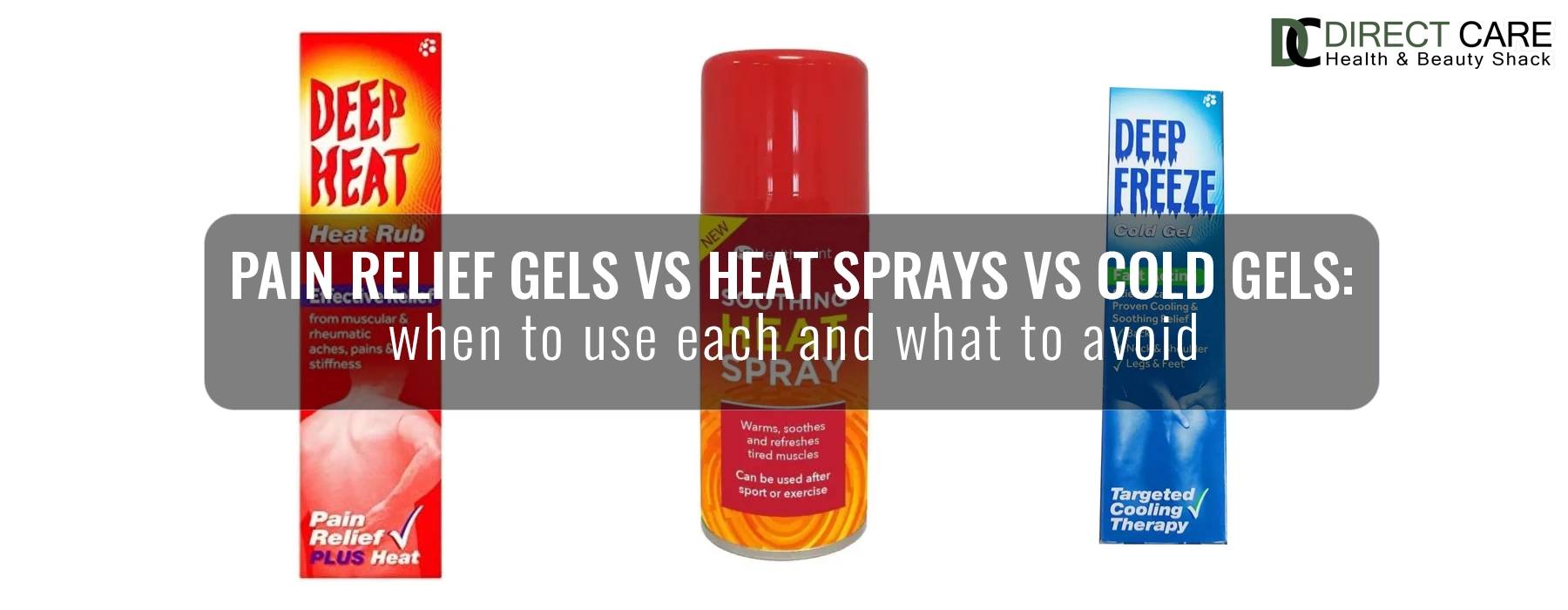
Pain relief products look similar on a category page, but they behave very differently once you apply them. A gel feels straightforward on a knee but awkward on your back. A heat spray covers shoulders fast but can feel intense on sensitive skin. A cold gel calms a tender spot but distracts you from your underclothing. The difference comes down to product type, not brand name. Gels give targeted control. Heat sprays deliver wide coverage. Cold gels offer cooling precision. This guide explains when each format helps and what mistakes lead to wasted purchases or skin irritation. You learn what to check before you buy.
30-second picker
-
Pain relief gels fit when you want targeted, rub‑in control on a small, reachable area (knee, elbow, wrist). The format works best when you can apply evenly without rushing.
-
Heat sprays fit when you want quick, wide coverage on a larger or hard‑to‑reach area (upper back, shoulders, thighs). The format suits people who dislike rubbing or struggle to reach the spot.
-
Cold gels fit when you want cooling comfort with precise placement, without filling the air like a spray. The format suits targeted areas where you want to keep the sensation contained.
-
If two formats sound “right,” pick the one you actually use consistently. A simpler routine beats a “perfect” product you stop using after one day.
Pain relief gels (targeted, rub-in control)
-
Pick a pain relief gel when the ache sits in a small, specific area you can reach. The gel format lets you place the product exactly where you need it, instead of spreading it across a wider zone.
-
Gel suits routines where rubbing feels practical and controlled. It gives you the option to apply slowly and evenly, which is important for joints and smaller muscle areas.
-
Gel becomes a poor fit when reach becomes the problem. If you cannot apply evenly to your back or shoulders, the format turns into patchy coverage and wasted product.
-
Some gels feel “medicated”, and others feel “sensation-led.” The label and active ingredient panel tell you which lane the product sits in, so you avoid buying a gel that does not match your expectations.
-
Rub-in products often interact with clothing and time. A thick layer can feel sticky or transfer, so a thin layer with drying time usually feels more comfortable.
-
Common gel mistakes reduce results fast: applying too much, applying too often, or applying on irritated skin. These habits increase discomfort and make the product feel “too strong” when the real issue is technique.
What to avoid with gels
-
Avoid treating gel like hand cream and covering a huge area. Gels work best as a targeted application, not a full-body smear.
-
Avoid mixing multiple rubs on the same spot “to strengthen it.” Layering increases irritation risk and makes it difficult to know what helps.
-
Avoid touching eyes or sensitive skin after application. Handwashing stays part of the gel routine, even when you are in a rush.
Heat sprays (fast coverage, less rubbing)
-
Choose a heat spray when stiffness and tension drive the problem, and you want warmth across a wider area. Sprays suit the upper back, shoulders, and thighs, where fast coverage matters.
-
Heat sprays help when you dislike rubbing or when pressing feels uncomfortable. The format supports a lighter-touch routine, which can feel easier on sore muscles.
-
Sprays also solve the “reach” problem better than gels. If you struggle to twist and rub product into your back, a spray often gives more even coverage.
-
Heat sprays carry different trade-offs than gels. The warming feeling can build after application, and overspraying can make the sensation feel harsh rather than helpful.
-
Spray technique shapes the experience more than people expect. Distance, amount, and time between applications affect comfort and product waste.
What to avoid with heat sprays
-
Avoid spraying too close or holding the spray on one spot for too long. Concentrated application often causes discomfort and makes the product feel “too intense.”
-
Avoid applying in a cramped, unventilated space. Strong scent and airborne products can feel irritating, especially if you already feel sensitive.
-
Avoid treating heat spray like a “stronger gel” and using more to chase sensation. A steady warming feel often works better than an aggressive blast of heat.
Cold gels (cooling comfort with precision)
-
Pick a cold gel when you want cooling comfort but still want exact placement. The gel format keeps the sensation local, which suits smaller areas and targeted joints.
-
Cold gel suits people who dislike overspray and prefer a cleaner, contained application. It also suits shared spaces where a spray feel or smell becomes annoying.
-
Cooling intensity varies by product and by how you apply it. A thin layer can feel controlled, while a thick layer can feel overpowering.
-
Cold gels can feel stronger under tight clothing. Trapped sensation can distract you during work, driving, or sleep, so timing and amount matter.
-
Cold gel often feels most useful when you want to “calm down” a tender area. It fits better when you want cooling comfort than when you want a warming, loosening feel.
What to avoid with cold gels
-
Avoid applying a thick layer and immediately dressing in tight fabric. That combination can make the cooling feel sharp and uncomfortable.
-
Avoid stacking cooling methods in the same area unless the label supports it. Too much cooling sensation can irritate the skin and ruin the routine.
-
Avoid chasing a stronger “freeze” by reapplying early. A controlled amount with a consistent routine usually gives a better experience.
Label checks and common mistakes
-
Check the product type first: pain relief gel, heat spray, or cold gel. Brand names can include multiple formats, so the format label matters more than the logo.
-
Confirm whether the product is medicated or sensation-led. This one check prevents a big mismatch between what you expect and what you apply.
-
Read usage directions with a buyer mindset: how often you apply, how much you use, and where you avoid. These details affect comfort, value for money, and skin tolerance.
-
Look for skin warnings and sensitive-area cautions. If you react easily to strong sensations, patch-test first and start with a smaller amount.
-
Avoid the three mistakes that ruin most topical pain relief routines: using too much, using too often, and layering multiple products on one spot. Those habits irritate and make you blame the product when the routine causes the issue.
Shop pain relief products
Shop pain relief by format and keep the choice simple: match the product type to how your body feels today. Choose a pain relief gel when you want targeted, rub-in control on a small, reachable area or a heat spray when you want quick coverage for stiffness across a wider or hard-to-reach zone. Go for a cold gel when you want cooling comfort with precise placement and less mess. Stick to one format per area so you can judge results without confusion, and use it as directed on the label. Shop the Health Care & Wellness collection and pick the format you can use consistently.