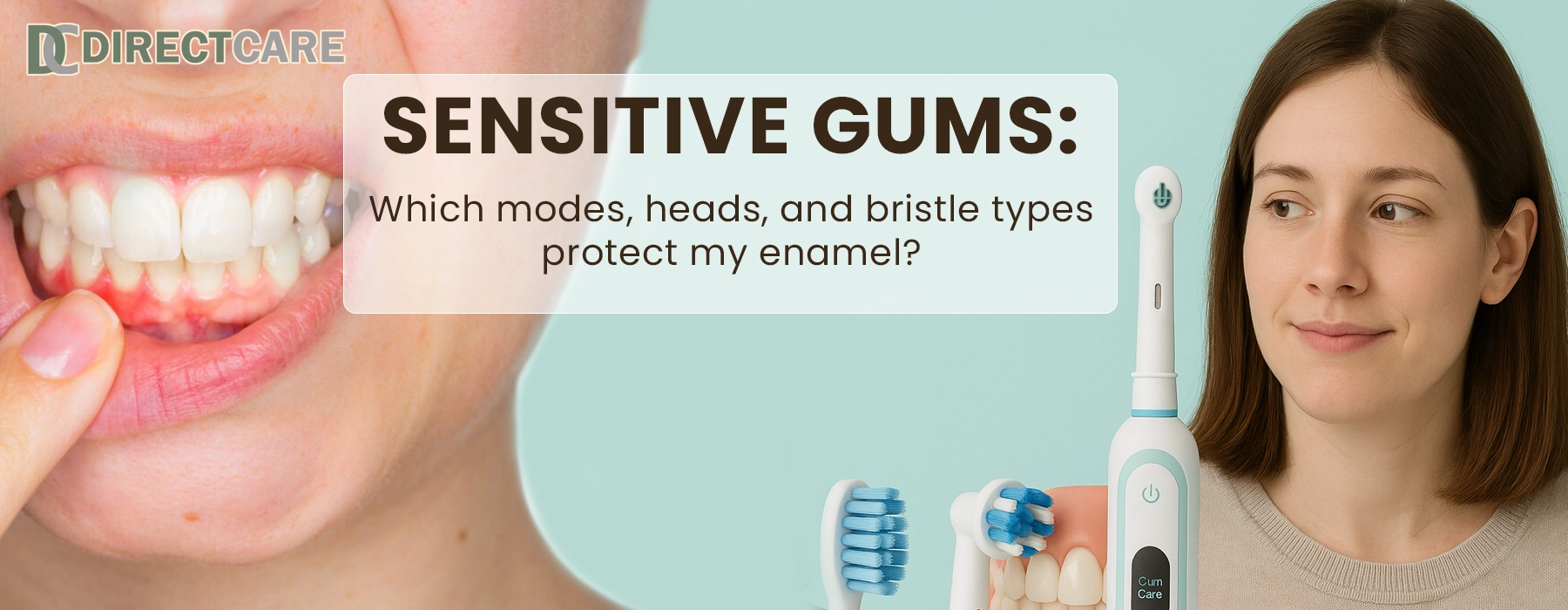
Sensitive gums change how brushing feels. A normal routine can sting at the gum line or feel rough on exposed roots, and the fix starts with gentler gear and better control. This guide has one goal: choose a protective brush mode, pick a compact head that reaches without scraping, and use soft or ultra‑soft bristles that glide while they lift the plaque. Match this with light pressure, a steady two‑minute timer, and a three‑month replacement rhythm. You get clear steps you can follow today and a quick restock plan so swaps never slip. Sensitive gums: Which modes, heads, and bristle types protect my enamel?
Quick answer (today’s setup)
- Use Sensitive or Gentle mode for daily brushing; cap intensity at the gum line.
- Keep the pressure sensor on so the handle slows or alerts when you press too hard.
- Choose a compact head (round oscillating or slim oval sonic) for precise access.
- Pick soft or ultra‑soft filaments with tapered or rounded tips; avoid firm filaments for daily use.
- Brush for two minutes with quadrant pacing; replace the head about every three months.
Brush modes that protect enamel
- Sensitive/Gentle mode lowers amplitude or speed; it reduces abrasive force at the margin.
- Daily Clean works if pressure control actively reduces speed when you over‑press; watch for a light or a pulse cue.
- Gum care/massage mode uses low pulses; pair with soft bristles when gums feel tender.
- Avoid Whitening/Polish as a default; limit to short, occasional use away from exposed roots.
- Use the gentlest mode at night; adjust in the morning if you want more tactile feedback.
Heads that reduce trauma and improve access
- Compact round heads target one tooth at a time; they make 45‑degree gumline brushing easier in tight spaces.
- Slim/oval sonic heads trace the contour along premolars and crowded lower incisors without bulk.
- Short‑neck designs increase control and reduce leverage near the gum edge.
- Indicator bristles fade with wear; swap before the fade reaches mid‑filament to avoid scratchy tips.
- Match head family to your handle; keep one sealed spare in the bathroom so changes never slip.
Bristle types that glide, not scrape
- Soft or ultra‑soft filaments lift plaque at the correct angle and reduce mechanical irritation.
- Tapered/feathered tips ease contact at the margin and feel smoother on exposed root surfaces.
- Rounded/polished ends glide over enamel; they reduce micro‑scratches from point contact.
- Denser tuft layouts spread the load, so each filament uses less force at the tip.
- Skip firm bristles in twice‑daily routines; they raise tenderness and surface wear.
Technique that protects gums and enamel
- Angle the head ~45 degrees to the gum line; let the tip ends touch the margin without digging under it.
- Use a light grip; if the handle flashes or pulses, lift pressure until the alert stops.
- Brush for two minutes with a pacer: 30 seconds per quadrant, covering inside, outside, and chewing surfaces.
- Move slowly: micro‑circles with oscillating heads or guided sweeps with sonic heads, no scrubbing.
- Start at the gum line each session; do not “chase the sting” by grinding on sore spots.
Paste, timing, and when to ease off intensity
- Choose a low‑abrasive daily paste; use a desensitising paste at night if needed.
- Brush twice daily; skip extra midday “bonus scrubs” that add wear without benefit.
- After acidic drinks or citrus, wait about 30 minutes before brushing to protect softened enamel.
- If tenderness spikes, switch to Sensitive mode and an ultra‑soft head for 1–2 weeks.
- Rinse with water after acids or hot/cold triggers to settle the mouth before brushing.
Replacement timing and hygiene that prevent scratchy tips
- Replace electric heads and manual brushes about every three months under normal use.
- Swap earlier if bristles splay, feel blunt, or indicator dye fades to the midpoint.
- Rinse after use, shake off water, and air‑dry upright; avoid closed caps at home that trap moisture.
- Keep heads apart in the holder so bristles do not touch; assign head colours per person.
- For travel, use a vented cap; remove it at home so the head dries fully.
Quick selector: choose in 30 seconds
- Gums sting now: Ultra‑soft tapered head + Sensitive mode + pressure sensor active.
- Heavy hand on the brush: Handle with active pressure control + compact head + soft bristles.
- Tight spacing/crowded arch: Small round oscillating head or slim oval sonic head.
- Exposed roots: Ultra‑soft, rounded/tapered filaments; avoid high‑intensity modes.
- Missed gum line plaque: Compact head + 45‑degree angle + slow passes with the timer.
Troubleshooting common brushing problems
- Bleeding at the margin: Lower mode, lighten pressure, shorten stroke length, and recheck your 45‑degree angle.
- Soreness after brushing: Move to ultra‑soft filaments and Sensitive mode for a week; confirm alerts trigger when you press.
- Rough feel on contact: Replace the head; worn tips scratch, even with good technique.
- Plaque build‑up between visits: Start at the gum line each time; use a compact head and slow passes along the margin.
- Paste burns or lingers: Rinse fully and switch to a low‑flavour, low‑abrasive formula.
Build a gentle routine you keep
- Morning: Sensitive mode, soft or ultra‑soft head, low‑abrasive paste, two‑minute timer.
- Night: Same settings; clean between teeth first so brushing stays light and even.
- Weekly: Quick mirror check on angle and pressure; confirm the handle did not alert.
- Monthly: Inspect head shape, bristle tips, and fade lines; replace early if comfort drops.
- Quarterly: Replace all heads in the household on one date; keep a multipack ready for swaps.
Restock plan: make swaps automatic
- Keep one sealed head per person in the bathroom; store a spare in the travel kit.
- Buy multipacks to reduce cost per head and align with three‑month cycles.
- Check handle‑head compatibility before you buy; confirm the model family on the product page.
- If a preferred head is out of stock, choose the nearest soft or ultra‑soft alternative.
- Set a calendar reminder for the next change; align with other bathroom restocks.
Buy Electric Toothbrushes and Heads
Choose a compact soft or ultra‑soft head, select Sensitive mode with pressure control, and brush for two minutes with light contact to protect enamel. Replace your head about every three months or sooner if bristles splay or indicator dye fades, and keep one sealed spare so swaps never slip. When you restock, browse electric toothbrushes and compatible heads, confirm model fit on the product page, and pick multipacks to align with quarterly changes. Set a calendar reminder today so your routine stays gentle, consistent, and enamel‑friendly.