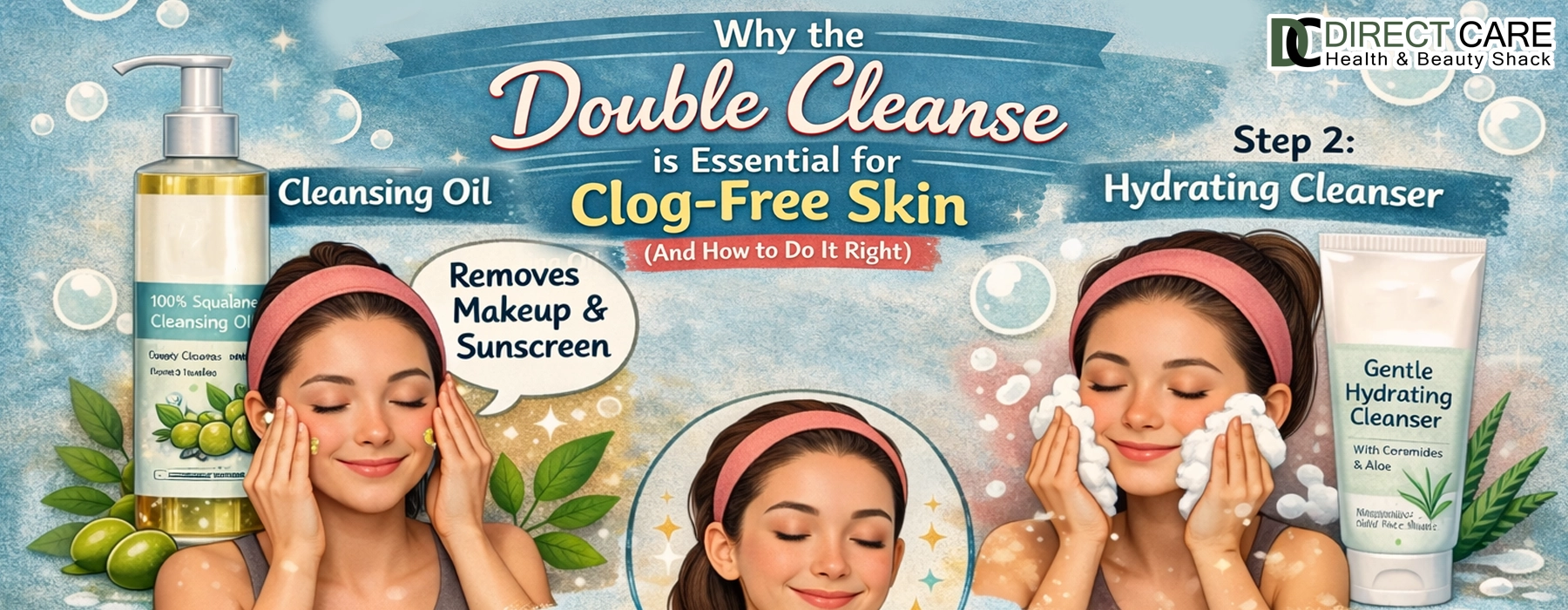
Skin can look clean before it actually feels clear. A face wash may remove the obvious layer of the day, yet sunscreen, makeup, excess oil, and daily grime can still sit around the pores and across the skin surface. That leftover buildup is often why skin feels freshly washed at night and still looks congested by morning. A double cleanse solves that problem in a simple, practical way. The first step lifts what clings to the skin, and the second clears what remains so the face feels properly clean without making the routine feel heavy. Using the right products, such as a cleansing balm, cleanser, moisturiser, or serum, makes the method easier to build into an everyday routine for oily, sensitive, and problem-prone skin.
Why One Wash Misses
-
Skin collects more than one kind of buildup during the day, including sweat, sebum, sunscreen, makeup, and general dirt, and those layers do not all lift in the same way.
-
A single cleanse may remove surface residue well enough, yet it can still leave behind sunscreen, long-wear makeup, or oil-based debris around the nose, chin, jawline, and hairline.
-
That leftover film matters because pores can hold onto what stays behind, which may lead to congestion, rough texture, and breakouts over time.
-
This is why skin can feel washed and still not feel fully fresh.
-
For a practical skincare routine, the goal is not to wash harder. It is to remove the full day in the right order so the skin carries less residue into the evening.
What Double Cleansing Means
-
Double cleansing means using two cleansing steps with two separate jobs rather than repeating the same wash twice.
-
The first cleanse targets what grips the face most firmly, especially sunscreen, makeup, excess oil, and other residue that water alone often struggles to shift.
-
This is where a cleansing balm or oil-based cleanser works well, because it helps break down the layer that sits most stubbornly on the skin.
-
The second cleanse removes what the first step loosens, along with any sweat, debris, or leftover film still sitting on the skin surface.
-
A Direct Care gel cleanser or cream cleanser can then finish the cleanse more comfortably, depending on what the skin needs.
-
A proper double cleanse should leave skin clean and comfortable, not squeaky, stripped, or tight.
Why Pores Benefit
-
Pores clog more easily when oil, sunscreen, makeup, and grime stay on the face after cleansing, especially when those layers build up day after day.
-
A double cleanse helps reduce that buildup before it settles more firmly around the pore opening.
-
This matters most at the end of the day because sunscreen and makeup are designed to stay in place, which means a quick wash often leaves traces behind.
-
Congestion-prone areas usually show the difference first, especially the T-zone, chin, and sides of the nose.
-
The point is not to chase poreless skin. The point is to give pores less to trap, so the complexion looks clearer and feels more settled over time.
Choose The First Step
-
The first cleanse works best when the formula can break down the layer that sits most stubbornly on the face, which is why oil cleansers, cleansing balms, and richer textures often suit this stage.
-
A Direct Care cleansing balm or oil-based cleanser is a strong fit here because it can help dissolve sunscreen, makeup, and excess oil without forcing rough rubbing.
-
These formulas work well because they target the kind of residue that clings to the skin throughout the day.
-
Massage the first cleanser over dry skin, especially around the nose, jawline, hairline, and any area where product tends to collect more heavily.
-
This step should leave the face feeling less coated before the second cleanse even begins.
Match The Second Step
-
The second cleanse should suit the skin’s condition, because this stage finishes the routine and prepares the face for the products that come next.
-
A Direct Care gel cleanser can work well for oilier or congestion-prone skin when the aim is to clear leftover residue without leaving a heavy finish.
-
A Direct Care cream cleanser is often the better choice for drier or more delicate skin when comfort matters just as much as cleanliness.
-
Sensitive skin usually benefits from a gentle, non-stripping formula at this stage, because barrier support still matters even when the routine needs a more complete cleanse.
-
The second cleanse does not need to feel stronger than the first. It simply needs to clear what remains and leave the skin balanced enough for moisturiser or serum afterwards.
Keep It Gentle
-
Double cleansing works best at night, when the skin carries the highest mix of sunscreen, makeup, oil, and outdoor buildup.
-
Most people do not need the same two-step cleanse first thing in the morning unless the skin feels especially oily or the evening routine leaves a heavier finish behind.
-
Lukewarm water supports the process better than hot water, because excess heat can leave skin drier and more uncomfortable.
-
Gentle pressure works better than scrubbing, since the right cleanser texture removes residue more effectively than friction alone.
-
It also helps to avoid piling strong exfoliants, scrubs, or harsh actives into the same routine, because too much intensity can leave the barrier unsettled.
-
A good double cleanse should feel thorough yet manageable. It should support the skin, not exhaust it.
Who Sees the Most Benefit
-
Daily sunscreen wearers often notice the clearest improvement because SPF products are made to stay on the skin and often outlast a quick wash.
-
Makeup wearers also benefit, especially when they use long-wear foundation, concealer, or waterproof formulas that tend to leave residue behind after a single cleanse.
-
Oily and blemish-prone skin often responds well because better cleansing helps reduce the buildup that adds to congestion and recurring breakouts.
-
People who often notice a coated feel after washing, makeup traces on a towel, or regular congestion around the nose and chin may also find the method helpful.
-
Sensitive skin can benefit too, provided the formulas stay gentle, since a well-chosen two-step cleanse often removes buildup with less rubbing than one harsh wash.
Avoid These Mistakes
-
Using two harsh cleansers in a row often leaves skin tight and uncomfortable, which turns a helpful routine into one that stresses the barrier.
-
Choosing the wrong second cleanser can create another problem, because oily, dry, and sensitive skin rarely responds well to the same finish.
-
Treating double cleansing like a scrubbing session usually causes more irritation than clarity, since friction does not remove residue as well as the right cleanser does.
-
Repeating the full two-step routine every morning without a reason may leave some skin types feeling over-cleansed, especially if the evening cleanse already clears the day properly.
-
Adding strong exfoliants straight after a heavy cleansing routine can push the skin too far and leave it reactive rather than calm.
-
Another mistake is expecting double cleansing to solve every skin concern on its own. It works best when it sits inside a simple, steady routine with the right cleanser, moisturiser, and any targeted treatment the skin already needs.
Build A Clearer Routine
-
A practical skincare routine does not need endless steps. It needs a cleansing method that removes buildup properly, a treatment step that matches the skin’s concern, and a moisturiser that keeps the skin comfortable afterwards.
-
Double cleansing fits at the front of that routine because skin responds better to follow-up products when residue no longer sits between the formula and the face.
-
Start with a cleansing balm or oil-based cleanser to lift sunscreen, makeup, and excess oil.
-
Follow with a gel cleanser or cream cleanser based on whether the skin feels oily, dry, delicate, or congestion-prone.
-
Finish with a moisturiser to keep the skin balanced, and add a serum if the routine needs more targeted support.
-
Clearer skin often comes from consistency more than complexity, and better cleansing is one of the simplest ways to improve that consistency.
Explore Better Cleansing
A double cleanse gives skin a more complete finish at the end of the day. One step lifts sunscreen, makeup, and excess oil, and the next clears what still lingers so the skin carries less residue into the night. That is why the double cleanse is essential for clog-free skin, and how to do it right starts with keeping the method simple, gentle, and suited to the skin in front of you. Start with a cleansing balm or oil-based cleanser, follow with a gel cleanser or cream cleanser, and finish with a moisturiser or serum to build a routine that feels clearer, calmer, and easier to keep up with each evening.