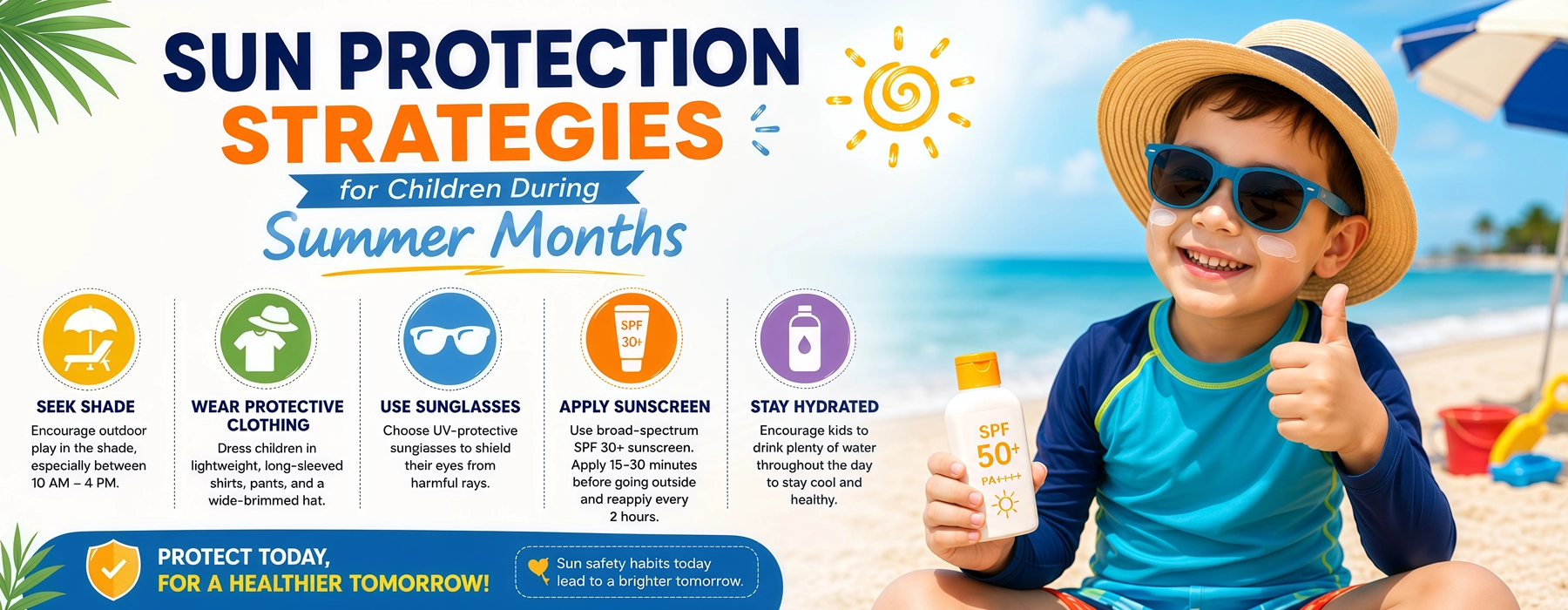
Warmer weather naturally draws families outside. However, ultraviolet radiation presents a serious hazard to delicate infant and toddler skin. A child's skin remains much thinner than an adult's, making it highly susceptible to immediate burns and long-term cellular damage. Parents require reliable methods to manage sun exposure effectively. At Direct Care, we understand the importance of building a healthy skin barrier from day one. We provide pharmacy-approved solutions and expert guidance to help families enjoy the outdoors with confidence. This guide outlines essential sun protection strategies for children during summer months to guarantee a secure, enjoyable season.
1. Avoid Peak UV Hours (11 AM to 3 PM)
Ultraviolet radiation reaches its absolute maximum intensity between 11 AM and 3 PM in the United Kingdom from March through October. This specific four-hour window presents the highest risk for severe sunburn.
-
Schedule outdoor activities, park visits, or beach trips outside this timeframe. Organising playdates for the early morning or late afternoon offers a much safer environment.
-
Seek physical shade actively to break direct exposure if families remain outside during the midday peak.
-
Use trees, large umbrellas, or pop-up ultraviolet tents to secure necessary shelter.
-
Remember, glass windows allow UVA rays to pass through directly. Children require protection even while sitting in the back seat during long car journeys.
-
Apply the shadow rule to gauge risk: when a child's shadow appears shorter than their physical height, ultraviolet radiation levels remain dangerously high.
2. Implement Strict Rules for Babies Under 6 Months
Medical professionals advise keeping infants under six months entirely out of direct, strong sunlight. A newborn's skin lacks adequate melanin to offer a baseline defence against radiation.
-
Rely exclusively on physical barriers and shade positioning to protect newborns during outdoor excursions. The epidermal layer remains too thin to handle ultraviolet exposure.
-
Avoid standard sunscreen formulas. These products contain active ingredients known to cause severe irritation or allergic reactions on underdeveloped skin barriers.
-
Dress the infant in lightweight, long-sleeved cotton garments. This provides full-body coverage without causing the baby to overheat.
-
Ensure the baby stays under solid shade at all times when outdoors.
-
Monitor the infant's temperature regularly to prevent heat exhaustion. Babies under six months cannot regulate body heat effectively.
3. Choose the Correct Sunscreen Formulation
Selecting the right product prevents chemical irritation while ensuring lasting defence against the sun.
-
Check the product label for a minimum of Sun Protection Factor (SPF) 30. Our team strongly recommends SPF 50 for young children.
-
Look for a four-star or five-star UVA rating on the bottle. This specific rating blocks the rays responsible for deep-tissue cellular damage.
-
Select mineral-based formulas containing zinc oxide or titanium dioxide. These physical blockers sit visibly on top of the skin and reflect light away from the body, making them much safer for toddlers.
-
Choose fragrance-free and hypoallergenic lotions to prevent contact dermatitis, especially in children dealing with sensitive conditions like eczema.
-
Avoid aerosol sprays. The application remains uneven, and the child risks inhaling airborne chemical particles.
-
Test any new product on a small patch of the child's inner arm twenty-four hours before a full-body application to check for adverse reactions.
4. Master the Application and Reapplication Rules
Proper application techniques dictate how well a sunscreen actually performs in real-world conditions.
-
Apply the lotion generously twenty to thirty minutes before leaving the house. This gives the product adequate time to bind effectively to the skin.
-
Cover all high-risk anatomical zones. Parents frequently miss the tops of the ears, the back of the neck, and the tops of the feet.
-
Follow the two-hour reapplication rule strictly for all outdoor activities, regardless of cloud cover or temperature.
-
Reapply a fresh layer of lotion immediately after the child exits the water and dries off. Swimming, heavy sweating, and physical towel drying strip the protective lotion away entirely.
-
Understand water-resistant labels. These products stay effective for only a short duration while submerged in the pool.
-
Apply sunscreen beneath clothing edges. This prevents burns when sleeves or shorts shift upwards during active outdoor play.
5. Utilise UV-Protective Clothing and Accessories
Fabric offers a constant, highly reliable physical barrier. It does not wash off, rub away, or require continuous reapplication.
-
Dress children in garments displaying an Ultraviolet Protection Factor (UPF) 50+ rating. These fabrics block out 98 per cent of harmful rays.
-
Use long-sleeved rash guards and full-piece swimming costumes to protect the highly exposed shoulders and back during water play.
-
Choose darker colours and tightly woven fabrics. They offer significantly better physical protection than light, loosely woven summer materials.
-
Swap standard baseball caps for wide-brimmed hats or legionnaire styles. These designs physically shade the face, ears, and back of the neck.
-
Equip children with wraparound sunglasses featuring a verified CE safety mark. These lenses filter out harmful light and protect developing retinas from bright glare.
-
Establish a strict dress code for outdoor play to build lifelong, automatic habits for proper sun safety.
6. Shade Prams and Pushchairs Safely
Parents frequently cover prams with thick blankets, towels, or muslin cloths to block the sun. This well-intentioned practice creates a dangerous environment.
-
Never cover a buggy with thick fabrics. The material traps exhaled heat and restricts fresh airflow completely.
-
Understand the greenhouse effect. An enclosed pram raises the internal temperature rapidly within minutes, putting the infant at severe risk of heat exhaustion.
-
Attach purpose-built, clip-on parasols to the pram frame. This setup shades the baby while maintaining completely open ventilation.
-
Utilise mesh sunshades designed specifically for pushchairs to block direct glare while allowing cool air to circulate freely.
-
Position the pram facing away from the direct sun to provide an extra layer of natural defence.
-
Check the baby's temperature regularly by feeling the back of the neck. This ensures they remain cool and comfortable while sleeping outdoors.
Shop Our Range of Baby Skincare Essentials
Maintaining healthy infant skin requires a consistent, proactive approach. Proper preparation prevents painful burns and secures long-term dermatological health. Parents need reliable products to execute these sun protection strategies for children during summer months effectively. At Direct Care, we stock an extensive, carefully curated selection of pharmacy-approved essentials designed specifically for delicate skin. Our baby skincare products include dermatologically tested SPF 50 lotions, soothing after-sun emollients, and gentle cleansing washes. Equip your family with the right tools to enjoy the warmer weather safely. Explore our complete baby skincare range.