The teething phase often marks a significant milestone in a baby’s development, typically beginning around six months. While this period brings excitement, it also presents physical and emotional challenges as inflamed gums cause discomfort. Babies naturally explore their environment through their mouths, making the selection of safe, soothing tools essential. Vigilance remains vital when choosing products that enter a baby's mouth, as not all items on the market prioritise long-term health. This guide empowers parents to identify high-quality, safe, and durable teethers that offer genuine relief without unnecessary risks.
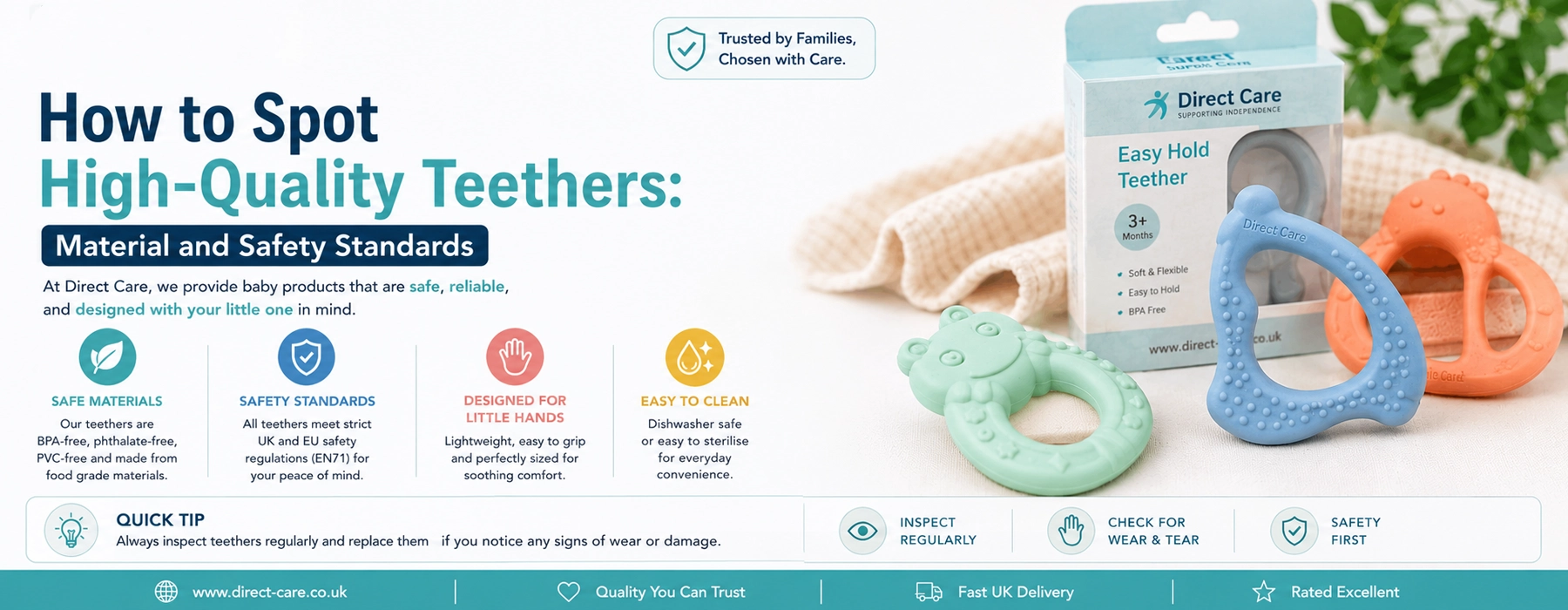
1. Prioritising Safe, Non-Toxic Materials
-
Selecting medical-grade, BPA-free silicone provides a non-porous, hypoallergenic surface that naturally resists bacterial growth.
-
Avoiding older plastic materials—which may contain phthalates, PVC, or lead—removes potential developmental risks often associated with inferior manufacturing.
-
Looking for clear "food-grade" certifications on product packaging confirms the material meets rigorous standards for contact with infants.
-
Natural alternatives, such as untreated, sustainably sourced maple or beech wood, offer excellent organic options, provided they remain free from chemical varnishes or synthetic sealants.
2. Examining Structural Integrity and Choking Hazards
-
Choosing a "one-piece" design eliminates small parts, buttons, or glued-on embellishments that could detach and pose significant choking hazards.
-
Testing the flexibility of a teether ensures it provides enough counter-pressure for swollen gums without causing injury to a baby’s developing teeth or soft palate.
-
Avoiding items with long straps or cords prevents serious strangulation risks that can occur during unsupervised play or sleep.
-
Inspecting the surface texture is crucial; tactile ridges must integrate seamlessly into the body of the teether to prevent crevices where bacteria accumulate.
3. Understanding Essential Safety Certification Standards
-
Strictly checking for the CE mark or UKCA marking on packaging confirms compliance with stringent British and European safety standards.
-
These certifications guarantee the product has undergone independent laboratory testing for chemical composition, mechanical strength, and flammability.
-
Reviewing manufacturer websites for transparency regarding testing protocols helps verify that brands value infant safety through voluntary, rigorous assessment.
-
Refraining from purchasing "budget" teethers from unverified online marketplaces protects your baby from products that frequently bypass essential safety regulations.
4. Assessing Ease of Hygiene and Maintenance
-
Non-porous silicone remains superior, as it withstands repeated sterilisation via boiling, steam cleaning, or high-temperature dishwasher cycles.
-
Porous materials or those with multi-part mechanisms trap moisture, creating environments where mould or yeast thrive over time.
-
Avoiding liquid-filled teethers prevents the risk of internal fluids—which may contain unknown preservatives or bacteria—leaking into your baby's mouth if the shell punctures.
-
Establishing a routine of daily washing with mild, fragrance-free baby soap keeps teething tools hygienic and ready for immediate use.
5. Identifying Age-Appropriate Ergonomics
-
Sizing matters; a teether must be large enough to prevent ingestion but small enough for tiny hands to grasp and maneuver with ease.
-
Selecting designs with easy-grip handles or loops assists babies in developing fine motor skills while they manage their own discomfort.
-
Monitoring the specific stage of development helps; front teeth often require thin, flat teethers, while emerging molars benefit from textured, multi-dimensional shapes.
-
Quality relates to usability; a teether only provides relief if the baby can hold it firmly enough to self-soothe effectively.
6. The Role of Temperature in Natural Soothing
-
Many high-quality silicone teethers allow for safe cooling in the refrigerator to provide extra relief to severely inflamed gums.
-
Cold temperatures provide a natural numbing effect, which reduces the reliance on external medicated gels.
-
Ensuring the material remains safe for cold temperatures prevents the teether from becoming brittle or cracking during the cooling process.
-
Always verify that a refrigerated teether is not placed in the freezer, as extreme cold can cause the material to freeze, making it too hard for sensitive gum tissue.
7. Evaluating Sensory and Developmental Benefits
-
Beyond simple gum relief, high-quality teethers often incorporate diverse textures—such as bumps, ribs, and ridges—that stimulate the baby's sensory development.
-
Vibrant, non-toxic colours assist in visual tracking and engagement, turning a necessity into an interactive toy.
-
Lightweight construction prevents premature muscle fatigue in the baby’s hands, allowing for longer sessions of calm exploration.
-
Choosing multi-sensory designs provides cognitive benefits while addressing the physical pain associated with incoming teeth.
Investing in Your Baby’s Comfort and Safety
Safe teething relies on the three pillars of non-toxic material purity, structural safety, and consistent hygiene. By prioritising these standards, you protect your baby while providing the relief they need during this developmental transition. We encourage parents to visit the Direct Care range of soothers and teethers to browse trusted, safety-tested products designed with infant wellbeing as the absolute priority.