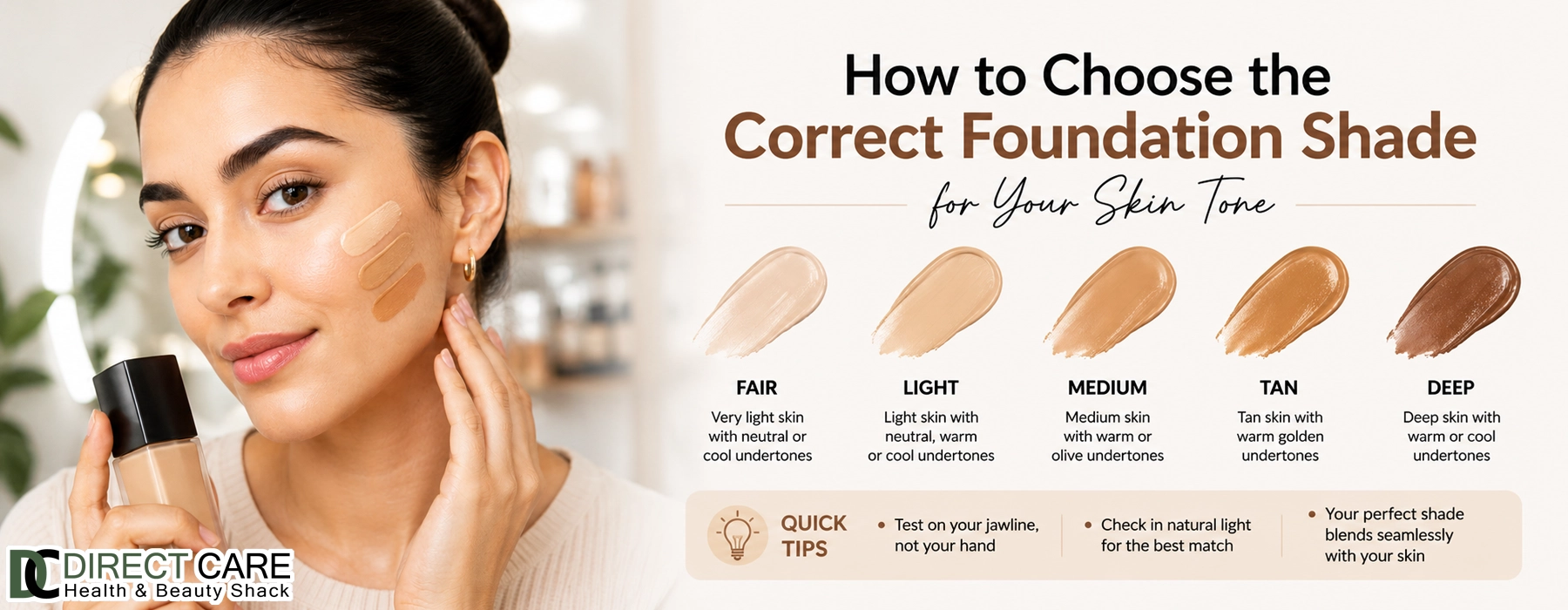
You finish your make-up, step near a window, and suddenly the foundation looks different. The jawline looks orange. The cheeks look pink. The neck looks lighter. This usually happens when the shade does not match the skin depth or undertone closely enough. The correct foundation shade should not sit on the face like a separate colour. It should blend into the skin and soften uneven tone without leaving a clear edge. Direct Care’s foundation category includes branded options from Covermark, Max Factor, Revlon and Rimmel, giving shoppers a practical place to compare shade names, formats and tones.
Start With The Depth Of Your Skin
-
Look at how light or deep your skin appears first. Skin depth gives you the starting shade family. Most ranges sit around fair, light, medium, tan, deep and rich groups.
-
Choose depth to match your skin, not to change it. A darker foundation may seem like a quick way to add warmth, but it often creates a line around the jaw and hairline.
-
Do not rely only on the shade name. One brand’s “ivory” can look different from another brand’s “ivory”. Use the name as a guide, then check the colour against your skin.
-
Use your natural colour as the base. Bronzer, blusher and contour can add shape later. Foundation should create the closest skin match first.
Work Out Your Undertone
-
Undertone explains why a close shade still looks wrong. Two foundations can have the same depth, but one may look yellow, pink, peach, red, golden, olive or neutral once applied.
-
Warm skin often suits yellow, golden or peach-based shades. If foundation turns pink, grey or flat, the base colour may move too cool.
-
Cool skin often suits pink, red or rosy-based shades. A warm shade can look orange or too golden once blended.
-
Neutral skin needs balance. A shade that leans too far in either direction can stand out, even when the depth looks right.
-
Olive skin needs extra care. Some foundations turn orange, ash-like or dull on olive undertones, so the shade needs more than a simple light-to-deep match.
Test Foundation Where The Face Meets The Neck
-
Use the jawline instead of the hand. Hands often look darker or redder because of sun exposure, washing and dryness. The jawline gives a better foundation colour match.
-
Place a thin stripe along the lower cheek and jaw. This shows how the shade moves between the face and neck without covering too much skin.
-
Blend only the edge. The correct foundation shade should fade into the skin with little effort. A visible stripe means the colour needs another look.
-
Check the chin and lower cheek too. These areas help show if the shade creates and lower cheek too.** These areas help show if the shade creates a natural bridge or a clear make-up line.
Let The Neck Guide The Final Match
-
The face and neck rarely match perfectly. Redness, tanning, skincare and texture can make the face look different from the neck.
-
Use the neck to avoid a mask effect. If the foundation matches the cheeks but stops sharply at the jaw, the shade does not work well enough for daily wear.
-
Do not match redness alone. Red cheeks can push you towards a shade that looks too pink across the rest of the face.
-
Look for a joined-up finish. The best foundation shade for your skin tone should connect the face, jaw and neck without obvious correction.
Check The Colour In Daylight
-
Move away from strong bathroom lighting. Warm bulbs can make a foundation look more golden. Bright white lighting can make the skin look paler than it is.
-
Stand near a window. Natural light shows orange, pink, pale or deep mismatch more clearly than most indoor lighting.
-
Look at the jawline from the side. A front-facing mirror can hide the edge. A side view often shows the real blend.
-
Take one quick photo. A phone photo near daylight can reveal a colour difference that the mirror softens.
Give The Shade Time To Settle
-
Do not judge the first swipe too quickly. Some foundations look lighter, deeper or flatter after a few minutes on the skin.
-
Watch for darkening. If the shade looks right at first and then becomes too deep, try a lighter option from the same range.
-
Check for dullness. A shade that turns grey usually points to the wrong undertone, not just the wrong depth.
-
Keep the test layer thin. A heavy patch can make even a close match look too strong.
Compare Close Shades Side By Side
-
Pick two or three nearby shades if possible. Choose one shade that looks close, one slightly lighter and one slightly deeper.
-
Place them next to each other on the jawline. The wrong undertone usually becomes easier to see when shades sit side by side.
-
Look for the shade that disappears first. The best match needs less blending and less correction.
-
Avoid judging from packaging alone. Bottles, tubes, product images and screen brightness can change how a foundation shade looks before it reaches the skin.
Read Shade Names Carefully When Shopping Online
-
Shade names can give useful clues. Words such as porcelain, ivory, caramel, cocoa, bronze and olive often point towards depth or undertone.
-
Look for the colour direction in the name. “Cool” may suggest pink or rosy tones. “Golden” or “warm” may suggest yellow or peach tones.
-
Compare within one brand first. Foundation shades often make more sense inside the same brand range than across different brands.
-
Use Direct Care’s category to narrow the choice. The foundation page brings together brands such as Covermark, Max Factor, Revlon and Rimmel, so shoppers can compare shade names and formats before choosing.
Notice The Signs Of A Poor Match
-
Too light: The face looks pale, flat or separate from the neck. Texture may also appear more obvious.
-
Too dark: The foundation creates a visible edge around the jaw, chin or hairline.
-
Too warm: The colour looks orange, yellow or golden in a way that does not match the skin.
-
Too cool: The shade looks pink, red or slightly grey once blended.
-
Wrong undertone: The depth looks close, but the foundation still looks separate from the skin.
-
Hard to blend: A shade that needs too much correction usually does not sit close enough.
Make Small Fixes Only When The Shade Is Close
-
A slightly light shade can take a little warmth. Use a small amount of bronzer around the outer face rather than applying a darker foundation everywhere.
-
A slightly deep shade needs a lighter layer. Apply less product and blend carefully through the jaw. If a line still shows, the shade is too dark.
-
A mildly warm shade can soften with neutral powder. This only helps when the mismatch is small.
-
A poor undertone needs a better shade. Blusher, powder or bronzer cannot fully fix a foundation that turns orange, pink or grey.
Use A Simple Shade-Matching Routine
-
Choose your depth group. Start with fair, light, medium, tan, deep or rich.
-
Check your undertone. Decide if your skin leans warm, cool, neutral or olive.
-
Test along the jawline. Avoid using the hand or wrist as the main guide.
-
Compare with the neck. The shade should connect both areas softly.
-
Use daylight before deciding. Natural light gives the clearest colour check.
-
Wait a few minutes. Let the foundation settle before you judge the match.
-
Choose the shade that looks least visible. A strong foundation match should look like skin, not a layer.
Choose A Foundation Shade That Works With Your Skin
-
A correct foundation shade supports your natural colour. It does not need to make the skin lighter, deeper, warmer or cooler.
-
Depth and undertone work together. Depth decides how light or deep the shade looks. Undertone decides the colour direction.
-
The jawline test gives the most useful check. It helps prevent a face-and-neck mismatch.
-
A close match needs less product. Thin layers look cleaner when the shade already sits close to the skin.
-
The right foundation match feels simple. It blends, settles and works with the rest of your make-up without constant correction.
Shop Foundation At Direct Care
Browse foundation at Direct Care and compare branded options from Covermark, Max Factor, Revlon and Rimmel in one place. Use shade names, product format and brand details to narrow your foundation shade for your skin tone before buying. Check your skin depth, undertone, jawline and neck match, then choose a cream, stick or liquid option that fits your routine. Direct Care’s foundation category helps you review trusted make-up choices for everyday wear and stronger coverage needs. Select the closest match, apply a thin layer first and build only where your skin needs extra coverage for an even daily base today.