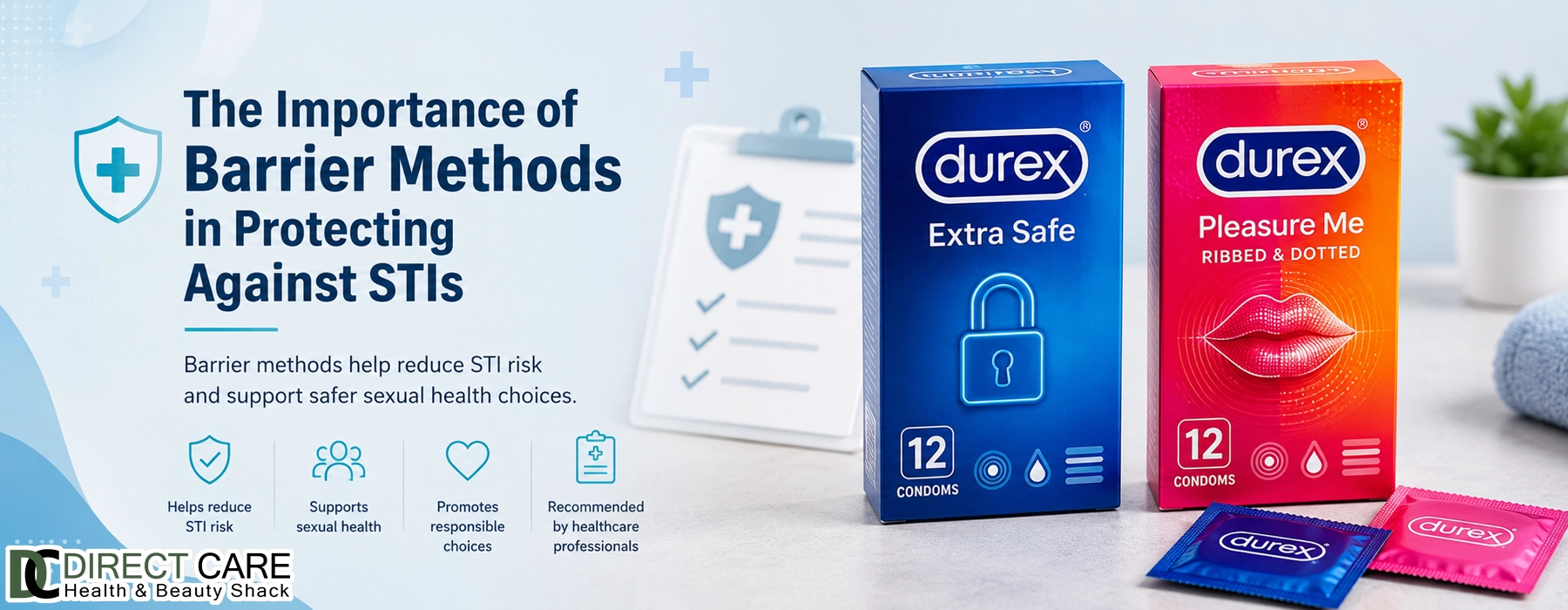
Safer sex often comes down to a small decision made before anything starts: use a barrier, use it properly, and keep it available. Many STIs do not show clear signs, so appearance, trust or a new relationship stage cannot confirm someone’s status. Barrier methods create a physical layer that helps reduce contact with fluids and some skin areas during sex. They do not remove every risk, but correct and consistent use makes a clear difference. This guide explains how barrier methods support STI protection, where mistakes happen, and how Direct Care’s sexual wellness range fits discreet, practical planning.
What Barrier Methods Do
-
They create a physical layer during sex. Barrier methods reduce direct contact between bodies, which helps lower exposure to fluids and some skin contact linked to STI transmission.
-
Condoms remain the most familiar choice. External condoms cover the penis and support STI protection during vaginal, anal and oral sex when used from the start of contact.
-
Other barrier options exist. Internal condoms and dental dams also create a layer for different types of sexual contact, giving people more ways to plan safer sex.
-
The purpose stays clear: reduce risk. Barrier methods do not promise complete protection, but they remain an important part of safer sexual wellness.
Why Protection Matters Without Symptoms
-
Many STIs stay hidden at first. A person can have an infection without pain, discharge, sores, itching or visible irritation.
-
Looking well does not confirm sexual health status. Clear skin, normal comfort and trust in a partner do not replace protection or testing.
-
Barrier methods reduce uncertainty. They give both partners a practical step before risk becomes a concern.
-
Planning helps remove pressure. Protection feels easier to discuss and use when it forms part of the routine rather than a rushed decision in the moment.
How Condoms Help Lower STI Risk
-
They reduce contact with bodily fluids. Condoms help limit exposure to semen, vaginal fluid and other fluids that can carry some infections.
-
They cover key contact areas. A correctly worn condom creates a layer over the penis and reduces direct contact during sex.
-
They support safer sex and pregnancy prevention. This makes condoms a practical sexual wellness essential for many people.
-
Timing changes the level of protection. A condom gives better protection when it goes on before sexual contact begins, not after contact has already started.
Correct Condom Use Makes Protection Work Better
-
Check the wrapper before use. Look at the expiry date and check for tears, holes, dryness or damage.
-
Open the packet with care. Teeth, scissors, sharp nails and jewellery can damage the condom before it is used.
-
Use one condom at a time. Two condoms together can create extra friction, which can increase the risk of tearing.
-
Leave room at the tip. Pinch the tip before rolling the condom down to help reduce pressure.
-
Use a fresh condom each time. A condom is single use. A new one is needed for each act and each change between types of sex.
Consistency Reduces Gaps In Protection
-
Occasional use leaves risk behind. Using condoms only sometimes means unprotected contact still happens.
-
Availability supports better habits. Keeping condoms close makes protection easier to use without delay.
-
Routine reduces awkwardness. When condom use feels normal, conversations often become more direct and less uncomfortable.
-
Consistency helps both partners. A steady safer sex habit gives clearer expectations and less room for pressure.
Lubricant Can Support Barrier Protection
-
Lubricant reduces friction. Less friction can make condom use more comfortable and may help reduce the chance of breakage.
-
The right type matters. Water-based lubricants usually work well with latex condoms and support comfort without damaging the material.
-
Oil-based products can weaken latex. Oils, greasy creams and some body products can damage latex condoms and increase breakage risk.
-
Comfort can support consistency. People are more likely to use barrier methods properly when protection feels comfortable and planned.
Common Mistakes That Reduce Protection
-
Starting too late. STI exposure can begin before full sex starts, so protection belongs at the beginning of sexual contact.
-
Using expired condoms. Condoms can weaken over time, especially when stored in heat, wallets or bags for long periods.
-
Ignoring fit. A condom that feels too tight or too loose can affect comfort, security and confidence.
-
Using the wrong lubricant. Oil-based products with latex condoms can damage the material, so condom-safe lubricant matters.
-
Removing protection early. Barrier methods only help while they remain in place.
What Barrier Methods Cannot Fully Cover
-
Some infections spread through uncovered skin. Condoms reduce risk, but they do not cover every area that may have skin-to-skin contact.
-
Visible sores need proper attention. Sores, unusual discharge, pain, bleeding or irritation need advice from a sexual health clinic, pharmacist or healthcare professional.
-
Reduced risk still matters. A method does not need to remove every risk to play an important role in protection.
-
Testing adds clarity. Barrier methods help lower risk, but STI testing gives clearer information about sexual health status.
Why STI Testing Still Matters
-
Testing confirms what protection cannot show. Barrier methods reduce exposure, but they cannot tell someone if they have an STI.
-
New partners make testing useful. Testing before or during a new relationship can help both people make informed choices.
-
Symptoms need prompt advice. Pain, discharge, sores, bleeding, itching or irritation should not be ignored.
-
Testing supports honest conversations. Knowing your status makes discussions about protection easier and more practical.
How To Talk About Barrier Methods With A Partner
-
Keep the message direct. A simple line such as “I use condoms for STI protection” gives a clear starting point.
-
Talk before sex starts. A calm conversation earlier usually feels easier than raising protection in the moment.
-
Make protection normal. Barrier methods are part of sexual wellness, not a sign of mistrust.
-
Expect respect. A partner who values your wellbeing should take STI protection seriously.
-
Plan the products first. Condoms and condom-safe lubricant kept nearby make safer choices easier to act on.
Where Direct Care’s Sexual Wellness Range Fits
-
Condoms support safer sex planning. Direct Care’s sexual wellness category includes condom options for people who want practical barrier method essentials.
-
Gels and lubricants support comfort. Lubricants can help with smoother condom use when dryness or friction creates discomfort.
-
Intimate hygiene products support daily care. These products sit within the wider sexual wellness range, though they do not replace barrier methods or STI testing.
-
Pregnancy tests support related concerns. They help with pregnancy questions after sex, but they do not give STI information.
-
Online shopping can feel more discreet. Browsing a sexual wellness category at home gives people space to compare products calmly.
A Simple Barrier Method Checklist
-
Check the wrapper. Look for an expiry date and signs of damage before use.
-
Use protection from the start. Put the condom on before sexual contact begins.
-
Choose condom-safe lubricant. This matters especially with latex condoms.
-
Use only one condom at a time. Two together can increase friction.
-
Change condoms when needed. Use a new condom for each act or change in sexual contact.
-
Dispose of it properly. Wrap it and place it in the bin, not the toilet.
Barrier Methods Support Safer Sexual Wellness
-
They give protection a clear role. Barrier methods help limit contact with fluids and some skin areas during sex.
-
Correct use makes the method stronger. Good storage, careful opening, proper fit and early use all affect protection.
-
Testing remains part of sexual health. STI checks give information that barrier methods cannot provide.
-
Communication improves confidence. Safer sex works better when both people understand the plan and agree on protection.
-
Direct Care supports discreet planning. The sexual wellness range helps people keep practical products ready without making the process feel awkward.
Shop Sexual Wellness Products
Shop Direct Care’s wide range of branded sexual wellness products in one discreet place. Browse condoms, gels and lubricants, intimate hygiene products, moisturising gels and pregnancy tests from trusted names, with options for safer sex planning, comfort and everyday intimate care. Choose barrier protection before sexual contact, pair condoms with a condom-safe lubricant where needed, and keep supplies ready so protection feels planned rather than rushed. Direct Care makes it easier to compare products calmly, select what suits your routine and order sexual wellness essentials with confidence for discreet home delivery or click and collect across the UK when needed.